Alzheimer’s disease (AD) is a progressive neurodegenerative disorder with a substantial heritable component and a complex polygenic architecture. Genetic risk is distributed across loci involved in lipid transport, endosomal trafficking, innate immunity, synaptic biology and protein clearance rather than being determined by a single pathogenic gene (1,2). Large genome-wide association studies (GWAS) have therefore become an important way to identify susceptibility loci and to prioritize biological pathways for functional investigation (3,4,5,6,7).
Lipid homeostasis is particularly relevant to AD because cholesterol and phospholipids are required for neuronal membranes, synaptic vesicle cycling and myelin maintenance. Lipid-mediated signaling also influences amyloid precursor protein processing, intracellular trafficking and inflammatory responses (8,9). APOE, ABCA7 and CLU have direct or closely related roles in lipid transport and efflux, whereas BIN1, PICALM, SORL1 and TREM2 connect lipid biology with endocytosis, microglial activation and amyloid clearance (4,5,6,7).
At the same time, GWAS associations are not equivalent to causal mechanisms. Linkage disequilibrium, non-coding regulatory variants, ancestry imbalance and differences in phenotype definition can complicate the assignment of a lead variant to a specific gene or pathway. A systematic synthesis is therefore needed to distinguish replicated statistical signals from biological interpretations that still require experimental validation.
The objective of this systematic review was to synthesize human GWAS and GWAS meta-analysis evidence on the genetic regulation of lipid-metabolism pathways in AD, summarize recurrent loci and interconnected biological processes, and identify limitations that constrain clinical translation.
The review was not prospectively registered and no public protocol was deposited; eligibility and synthesis decisions are therefore reported as applied. Registration status is stated in the closing declarations.
The review follows a PRISMA 2020-informed reporting structure (10). Searches of PubMed/MEDLINE, Scopus and Web of Science were run from inception through February 2026. Search concepts covered Alzheimer’s disease, genome-wide association studies and lipid-related biology, including cholesterol, lipoproteins, phospholipids, lipid transport, lipid metabolism, APOE and ABCA7. Reference lists were also screened. Strategies are reported at concept level; executed strings, per-source exports and a day-specific final search date are not included in the supplementary material, and PRISMA-S identifies the search details that full reproducibility would require (11). Table S1 maps reporting completeness.
Eligible studies were human GWAS, GWAS meta-analyses or integrative genetic studies that evaluated AD or clinically relevant AD-related phenotypes and reported susceptibility loci, mapped genes or pathway-level results relevant to lipid biology. Studies were excluded when they were animal or in vitro experiments, narrative reviews, editorials, unrelated to AD, or did not provide interpretable genetic-locus or pathway information. Duplicate reports of the same analysis were consolidated where possible.
Records were screened by title and abstract and then by full-text assessment. Extracted items included publication year, study design, cohort size, population, phenotype definition, lead loci or genes, functional annotation, lipid-related pathways and principal interpretation. Screening and extraction were carried out by the review team, with disagreements resolved by discussion. Overlapping cohort reports were considered together where identifiable; sample sizes are not added across reports, because the cohorts of large consortium studies partly overlap.
No contact with primary-study authors was undertaken and no unpublished data were sought. Information not reported in a publication was coded as not reported; individual participant data and missing effect estimates were not reconstructed. Partial cohort overlap between large consortium studies limits the interpretation of independent replication.
No formal study-level risk-of-bias assessment was performed. Methodological limitations are considered descriptively, including phenotype ascertainment, ancestry representation, cohort overlap, imputation quality, population structure, gene mapping and pathway annotation. These observations do not constitute validated risk-of-bias categories.
Reporting bias and outcome-specific certainty were not formally assessed. Narrative conclusions distinguish replicated associations from mechanistic hypotheses and do not imply a formal certainty rating.
The primary synthesis was narrative. Findings were organized by recurrent loci, lipid-related biological processes and their connections with endosomal trafficking and microglial immunity. A pooled quantitative estimate was not calculated because the studies differed in cohort composition, phenotype ascertainment, variant prioritization, analytic pipelines and definitions of lipid-related pathways. Statistical associations were therefore interpreted as evidence of statistical association and gene or pathway prioritization, not as proof of causality or treatment efficacy. The Synthesis without meta-analysis (SWiM) guideline addresses intervention-effect reviews and is cited only as a reporting reference for transparent grouping, not as a genetic-association appraisal tool (12).
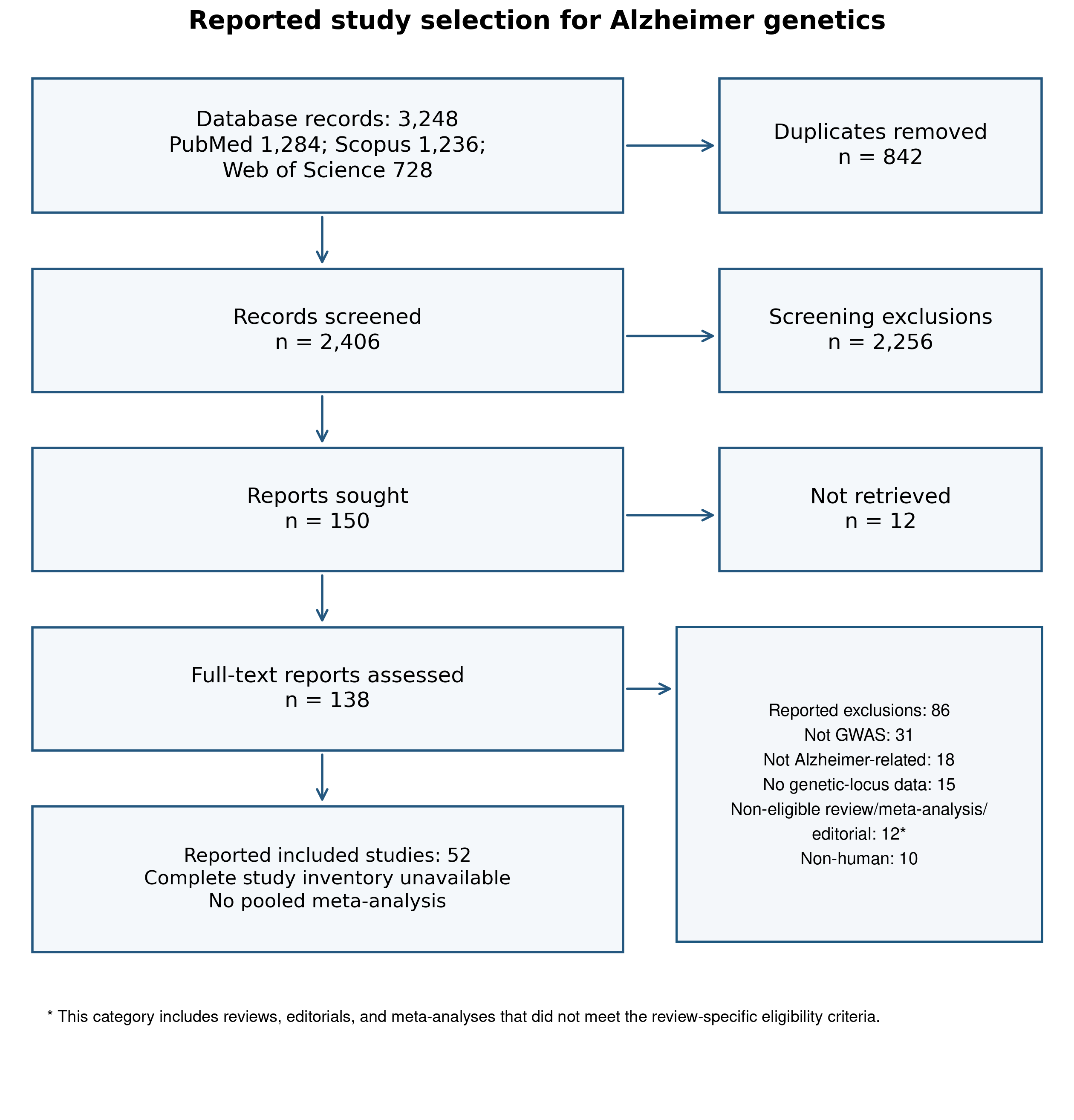
The selection flow comprised 3,248 records: 1,284 from PubMed, 1,236 from Scopus and 728 from Web of Science. After removal of 842 duplicates, 2,406 records were screened and 2,256 excluded. Of the 150 reports sought, 12 were not retrieved and 138 were assessed; 86 were excluded, leaving 52 included studies. Table 2 presents the principal genome-wide association studies and meta-analyses on which the synthesis is based; contextual and mechanistic references cited in the Discussion are not counted as additional eligible studies. No quantitative meta-analysis was performed (Figure 1).
Figure 1. PRISMA 2020 study-selection flow.
Table 1. Recurrent AD-associated loci and their relationship to lipid biology
| Gene | Representative variant | Chr | Principal function | Relationship to lipid biology |
|---|---|---|---|---|
| APOE | rs429358 / rs7412 | 19 | Lipoprotein transport and cholesterol distribution | Direct; strongest common genetic risk signal |
| ABCA7 | rs3764650 | 19 | Lipid efflux and phagocytosis | Direct; linked to membrane lipid handling and clearance |
| CLU | rs11136000 | 8 | Lipid transport and chaperone activity | Direct; linked to extracellular lipid and amyloid biology |
| BIN1 | rs6733839 | 2 | Endocytosis and membrane dynamics | Indirect; connects membrane remodeling with trafficking |
| PICALM | rs3851179 | 11 | Clathrin-mediated endocytosis | Indirect; relevant to vesicle and APP trafficking |
| TREM2 | rs75932628 | 6 | Microglial activation and phagocytosis | Linked immune-lipid pathway; affects lipid sensing |
| CR1 | rs6656401 | 1 | Complement regulation | Linked immune pathway with potential effects on clearance |
| SORL1 | rs11218343 | 11 | APP and endosomal trafficking | Linked to lipid-dependent membrane trafficking |
| CD33 | rs3865444 | 19 | Microglial immune regulation | Linked to inflammatory and lipid-handling states |
| MS4A6A | rs610932 | 11 | Microglial signaling | Linked immune-lipid and phagocytic processes |
| EPHA1 | rs11767557 | 7 | Cell signaling | Indirect; pathway-level relationship remains uncertain |
| HLA-DRB1 | rs9271192 | 6 | Antigen presentation | Indirect; reflects immune context rather than a lipid-specific effect |
| Abbreviations: APP, amyloid precursor protein; Chr., chromosome; GWAS, genome-wide association study. | ||||
The reviewed evidence consistently supported a polygenic architecture. APOE remained the most prominent common risk locus, while ABCA7, CLU, BIN1, PICALM, TREM2, CR1 and SORL1 were repeatedly implicated across large-scale analyses. These loci do not represent a single linear pathway: they span lipoprotein transport, phagocytosis, endocytosis, complement signaling, microglial activation and amyloid precursor protein trafficking. Table 1 summarizes representative loci and their relationships to lipid biology.
The exact number of associated loci varied by cohort size, phenotype definition and analytic design. Larger meta-analyses expanded the catalog of risk regions and increased the number of loci that could be functionally prioritized, but the presence of a lead variant did not by itself establish the causal gene. Many signals were located in non-coding regions, making gene assignment dependent on expression quantitative trait loci, chromatin accessibility, colocalization or other integrative evidence (4,5,6,7).
Table 2. Representative GWAS and meta-analysis evidence relevant to lipid-metabolism pathways in Alzheimer’s disease
| Study | Design and sample | Key loci / genes | Main lipid-related interpretation |
|---|---|---|---|
| Lambert et al. (3) (2013) | GWAS meta-analysis; 74,046 individuals | CLU, ABCA7, CR1 and additional loci | Established multiple susceptibility loci and linked AD risk to lipid processing and immune biology. |
| Kunkle et al. (4) (2019) | Diagnosed-AD meta-analysis; approximately 94,000 individuals | APOE, BIN1, CLU, ABCA7, PICALM and others | Supported the roles of amyloid, tau, immunity and lipid processing in AD risk. |
| Jansen et al. (5) (2019) | GWAS meta-analysis; approximately 455,000 individuals | APOE, CR1, TREM2, ABCA7 and additional loci | Identified functional pathways linking genetic risk with immune and lipid-related processes. |
| Wightman et al. (7) (2021) | GWAS; 1,126,563 individuals | Previously known and newly prioritized risk regions | Expanded the locus catalog and reinforced microglial, immune and protein-catabolism pathways. |
| Bellenguez et al. (6) (2022) | Two-stage GWAS; 111,326 clinically diagnosed/proxy cases and 677,663 controls (788,989 total) | ABCA7, APOE, PLCG2 and additional loci | Highlighted microglial biology and interactions between lipid handling and innate immunity. |
| Abbreviations: AD, Alzheimer’s disease; GWAS, genome-wide association study. | |||
The strongest mechanistic theme was the relationship between AD risk and lipid transport. APOE participates in the distribution of cholesterol and other lipids in the central nervous system, while ABCA7 contributes to lipid efflux and phagocytic function. CLU has chaperone and lipid-transport functions that intersect with extracellular amyloid biology. Together, these signals support the view that altered lipid handling may affect neuronal membranes, endosomal trafficking and the clearance of extracellular material, although the direction and magnitude of these effects are context-dependent (4,6,9).
Several loci that are not lipid-specific in annotation nevertheless converge on lipid-dependent cellular processes. BIN1 and PICALM influence membrane curvature, clathrin-mediated endocytosis and vesicle trafficking. SORL1 participates in amyloid precursor protein sorting, while TREM2, CD33 and MS4A6A are associated with microglial activation and phagocytic states (15,16). These pathways provide a biological bridge between lipid metabolism, membrane remodeling, immune signaling and amyloid clearance.
Microglia require tightly regulated lipid uptake, storage and export to respond to myelin debris, apoptotic material and amyloid-associated structures. Disruption of this balance may promote a disease-associated inflammatory state, but the available genetic evidence cannot determine whether altered lipid metabolism is an initiating event, a consequence of neurodegeneration or a process that amplifies pathology. This distinction is important when translating pathway associations into therapeutic targets (7,9,17,18,19,20,21).
APOE illustrates the distinction between a biological pathway and a clinical risk association. Its alleles influence age-related susceptibility to Alzheimer disease, but this does not establish that a peripheral lipid measurement mediates the genetic association. Family-based gene-dose evidence and population-based age-at-onset evidence should be interpreted within their respective designs (22,23).
Generalizability remains a major limitation. Many large GWAS have been conducted predominantly in populations of European ancestry, and the effect sizes, linkage disequilibrium structure and allele frequencies may differ across populations. Multi-ancestry studies and ancestry-aware fine-mapping are needed to determine whether the same variants, genes and lipid-related pathways operate consistently across populations.
The included studies varied in phenotype ascertainment, case-control composition, cohort overlap, imputation quality, variant prioritization and pathway databases. Some reports focused on diagnosed AD, whereas others used proxy phenotypes, family history or biomarker-defined traits. These differences limit direct comparison of locus counts and make a pooled quantitative estimate inappropriate. In addition, pathway enrichment can be sensitive to the choice of gene-mapping method and reference annotation. The STrengthening the REporting of Genetic Association Studies (STREGA) extension provides relevant reporting considerations for genotyping, population stratification and relatedness; it does not replace a study-level risk-of-bias assessment (24).
The review is limited by coverage of three databases and by prioritization of English-language reporting. Search strategies are reported at concept level rather than as executed strings, and exclusions are reported by category rather than by citation. Table 2 presents the principal studies underpinning the synthesis rather than an exhaustive included-study table. No formal risk-of-bias or evidence-certainty ratings were assigned. Genetic association also requires functional validation before causal or clinical claims can be made.
This systematic review indicates that lipid biology is not a peripheral theme in AD genetics. Across large GWAS and meta-analyses, recurrent signals converge on cholesterol transport, lipid efflux, membrane remodeling, endosomal trafficking and microglial immune function. APOE, ABCA7 and CLU provide the most direct links to lipid handling, whereas BIN1, PICALM, SORL1 and TREM2 illustrate how lipid-dependent cellular functions intersect with amyloid processing and innate immunity.
The findings should nevertheless be interpreted with appropriate caution. A locus can be robustly associated with AD while the causal gene, cell type and direction of biological effect remain uncertain. Non-coding variants may regulate several transcripts in a context-dependent manner, and a pathway enriched in statistical signals may reflect correlated genes rather than a single modifiable process. The most defensible conclusion is therefore that lipid homeostasis is a biologically supported and clinically promising area for further investigation, not that a specific lipid-targeted intervention has already been validated.
Foundational studies placed CLU and PICALM among the common-variant susceptibility loci and subsequently expanded the signal to ABCA7 and immune-related regions, including MS4A and CD33 (25,26,27). Rare-variant studies of TREM2 provide complementary evidence linking innate immune biology to disease susceptibility (28,29). Integrative fine-mapping further illustrates how association signals can be prioritized using functional evidence without equating the lead variant with a proven causal gene (30). These studies provide biological context for the loci discussed above.
Future studies should combine multi-ancestry GWAS with fine-mapping, single-cell transcriptomics, epigenomic profiling, lipidomics and experimental perturbation. Longitudinal designs should test whether genetic risk modifies lipid-related biomarkers, microglial states, amyloid or tau progression, and response to treatment. Such integrative work is necessary before genetic information can be used to provide individualized risk prediction or to select a lipid-directed therapy.
The accumulated GWAS evidence supports a central relationship between genetic regulation of lipid metabolism and AD susceptibility. Recurrent loci implicate cholesterol transport, lipid efflux, membrane trafficking and microglial immune biology. However, most associations remain probabilistic and require functional confirmation, particularly in populations that are underrepresented in current datasets. The next stage of translation should prioritize causal gene mapping, multi-ancestry validation and experimentally tested links between lipid homeostasis and clinically meaningful AD outcomes. Figure 2 summarizes these proposed relationships without implying causality.
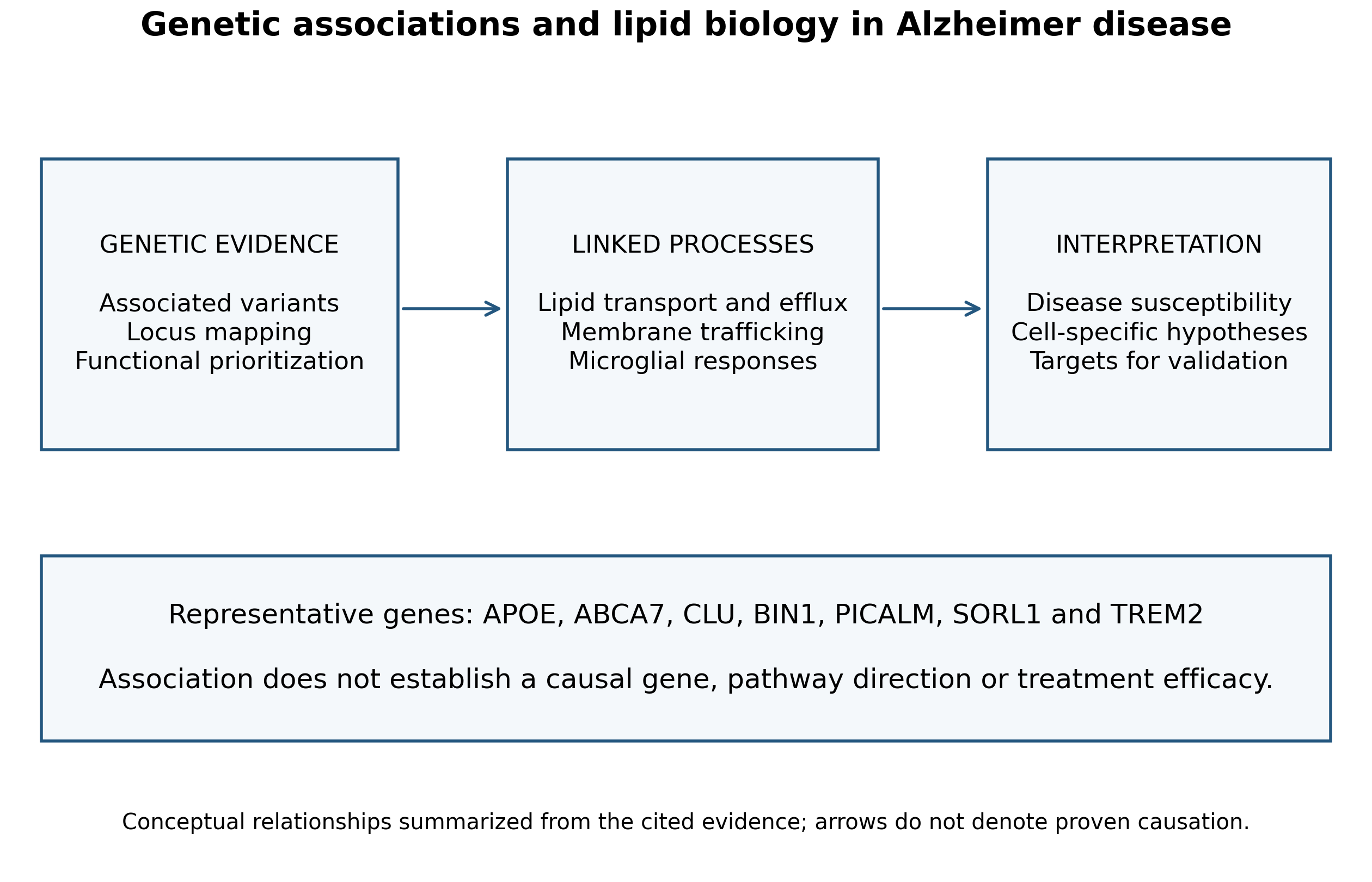
Figure 2. Conceptual links between genetic associations, lipid biology and Alzheimer disease. Arrows indicate proposed relationships, not proven causation. Representative genes are discussed in the text.
Author contributions: ZK: Conceptualization, Methodology, Investigation, Formal analysis, and Writing – original draft. AT: Data curation, Investigation, and Writing – review and editing. ZT: Formal analysis, Visualization, and Writing – review and editing. AK: Validation, Data curation, and Writing – review and editing. DT: Project administration, Supervision, and Writing – review and editing. All authors have read and approved the final manuscript and agree to be accountable for all aspects of the work.
Funding: No funding was obtained for the preparation of this manuscript.
Conflicts of interest: None of the authors report relationships that could be perceived as influencing the work reported here.
Acknowledgments: The authors acknowledge the genome-wide association consortia and participating cohorts whose published summary results underpin this review, and the developers of the PRISMA 2020 statement, whose guidance shaped its reporting.
Data availability statement: The review synthesizes published aggregate results from the cited genome-wide association studies and meta-analyses; no new or individual-level genotype data were generated or analyzed. The complete included-study inventory, the executed search strategies, per-source exports and the individual screening, exclusion and extraction records are not included in the supplementary material.
AI use statement: ChatGPT (OpenAI) assisted with language editing, internal consistency checks, citation placement and formatting only. It was not used for searching, screening, data extraction or appraisal, and no formal risk-of-bias assessment was produced with it. The authors are responsible for verifying the revised content and these declarations.
Gatz M, Reynolds CA, Fratiglioni L, et al. Role of genes and environments for explaining Alzheimer disease. Arch Gen Psychiatry. 2006;63(2):168-174. doi:10.1001/archpsyc.63.2.168.
Tanzi RE, Bertram L. Twenty years of the Alzheimer's disease amyloid hypothesis: a genetic perspective. Cell. 2005;120(4):545-555. doi:10.1016/j.cell.2005.02.008.
Lambert JC, Ibrahim-Verbaas CA, Harold D, et al. Meta-analysis of 74,046 individuals identifies 11 new susceptibility loci for Alzheimer’s disease. Nat Genet. 2013;45(12):1452-1458. doi:10.1038/ng.2802.
Kunkle BW, Grenier-Boley B, Sims R, et al. Genetic meta-analysis of diagnosed Alzheimer’s disease identifies new risk loci and implicates Aβ, tau, immunity and lipid processing. Nat Genet. 2019;51(3):414-430. doi:10.1038/s41588-019-0358-2.
Jansen IE, Savage JE, Watanabe K, et al. Genome-wide meta-analysis identifies new loci and functional pathways influencing Alzheimer’s disease risk. Nat Genet. 2019;51(3):404-413. doi:10.1038/s41588-018-0311-9.
Bellenguez C, Küçükali F, Jansen IE, et al. New insights into the genetic etiology of Alzheimer’s disease and related dementias. Nat Genet. 2022;54(4):412-436. doi:10.1038/s41588-022-01024-z.
Wightman DP, Jansen IE, Savage JE, et al. A genome-wide association study with 1,126,563 individuals identifies new risk loci for Alzheimer’s disease. Nat Genet. 2021;53(9):1276-1282. doi:10.1038/s41588-021-00921-z.
Grimm MO, Grimm HS, Pätzold AJ, et al. Regulation of cholesterol and sphingomyelin metabolism by amyloid-beta and presenilin. Nat Cell Biol. 2005;7(11):1118-1123. doi:10.1038/ncb1313.
Di Paolo G, Kim TW. Linking lipids to Alzheimer's disease: cholesterol and beyond. Nat Rev Neurosci. 2011;12(5):284-296. doi:10.1038/nrn3012.
Page MJ, McKenzie JE, Bossuyt PM, et al. The PRISMA 2020 statement: an updated guideline for reporting systematic reviews. BMJ. 2021;372:n71. doi:10.1136/bmj.n71.
Rethlefsen ML, Kirtley S, Waffenschmidt S, et al. PRISMA-S: an extension to the PRISMA Statement for Reporting Literature Searches in Systematic Reviews. Syst Rev. 2021;10(1):39. doi:10.1186/s13643-020-01542-z.
Campbell M, McKenzie JE, Sowden A, et al. Synthesis without meta-analysis (SWiM) in systematic reviews: reporting guideline. BMJ. 2020;368:l6890. doi:10.1136/bmj.l6890.
Blanchard JW, Akay LA, Davila-Velderrain J, et al. APOE4 impairs myelination via cholesterol dysregulation in oligodendrocytes. Nature. 2022;611(7937):769-779. doi:10.1038/s41586-022-05439-w.
Puglielli L, Konopka G, Pack-Chung E, et al. Acyl-coenzyme A: cholesterol acyltransferase modulates the generation of the amyloid beta-peptide. Nat Cell Biol. 2001;3(10):905-912. doi:10.1038/ncb1001-905.
Sims R, van der Lee SJ, Naj AC, et al. Rare coding variants in PLCG2, ABI3 and TREM2 implicate microglial-mediated innate immunity in Alzheimer’s disease. Nat Genet. 2017;49(9):1373-1384. doi:10.1038/ng.3916.
Karch CM, Goate AM. Alzheimer's disease risk genes and mechanisms of disease pathogenesis. Biol Psychiatry. 2015;77(1):43-51. doi:10.1016/j.biopsych.2014.05.006.
Huang YA, Zhou B, Wernig M, Südhof TC. ApoE2, ApoE3, and ApoE4 Differentially Stimulate APP Transcription and Aβ Secretion. Cell. 2017;168(3):427-441.e21. doi:10.1016/j.cell.2016.12.044.
Zalocusky KA, Najm R, Taubes AL, et al. Neuronal ApoE upregulates MHC-I expression to drive selective neurodegeneration in Alzheimer’s disease. Nat Neurosci. 2021;24(6):786-798. doi:10.1038/s41593-021-00851-3.
Qi G, Mi Y, Shi X, Gu H, Brinton RD, Yin F. ApoE4 impairs neuron–astrocyte coupling of fatty acid metabolism. Cell Rep. 2021;34(1):108572. doi:10.1016/j.celrep.2020.108572.
Moulton MJ, Barish S, Ralhan I, et al. Neuronal ROS-induced glial lipid droplet formation is altered by loss of Alzheimer's disease-associated genes. Proc Natl Acad Sci U S A. 2021;118(52):e2112095118. doi:10.1073/pnas.2112095118.
Law SH, Chan ML, Marathe GK, Parveen F, Chen CH, Ke LY. An Updated Review of Lysophosphatidylcholine Metabolism in Human Diseases. Int J Mol Sci. 2019;20(5):E1149. doi:10.3390/ijms20051149.
van der Lee SJ, Wolters FJ, Ikram MK, et al. The effect of APOE and other common genetic variants on the onset of Alzheimer's disease and dementia: a community-based cohort study. Lancet Neurol. 2018;17(5):434-444. doi:10.1016/s1474-4422(18)30053-x.
Corder EH, Saunders AM, Strittmatter WJ, et al. Gene dose of apolipoprotein E type 4 allele and the risk of Alzheimer’s disease in late onset families. Science. 1993;261(5123):921-923. doi:10.1126/science.8346443.
Little J, Higgins JP, Ioannidis JP, et al. STrengthening the REporting of Genetic Association Studies (STREGA): an extension of the STROBE statement. PLoS Med. 2009;6(2):e22. doi:10.1371/journal.pmed.1000022.
Harold D, Abraham R, Hollingworth P, et al. Genome-wide association study identifies variants at CLU and PICALM associated with Alzheimer's disease. Nat Genet. 2009;41(10):1088-1093. doi:10.1038/ng.440.
Hollingworth P, Harold D, Sims R, et al. Common variants at ABCA7, MS4A6A/MS4A4E, EPHA1, CD33 and CD2AP are associated with Alzheimer's disease. Nat Genet. 2011;43(5):429-435. doi:10.1038/ng.803.
Naj AC, Jun G, Beecham GW, et al. Common variants at MS4A4/MS4A6E, CD2AP, CD33 and EPHA1 are associated with late-onset Alzheimer's disease. Nat Genet. 2011;43(5):436-441. doi:10.1038/ng.801.
Guerreiro R, Wojtas A, Bras J, et al. TREM2 variants in Alzheimer's disease. N Engl J Med. 2013;368(2):117-127. doi:10.1056/nejmoa1211851.
Jonsson T, Stefansson H, Steinberg S, et al. Variant of TREM2 associated with the risk of Alzheimer's disease. N Engl J Med. 2013;368(2):107-116. doi:10.1056/nejmoa1211103.
Schwartzentruber J, Cooper S, Liu JZ, et al. Genome-wide meta-analysis, fine-mapping and integrative prioritization implicate new Alzheimer's disease risk genes. Nat Genet. 2021;53(3):392-402. doi:10.1038/s41588-020-00776-w.
Table S1. PRISMA 2020 reporting checklist
| Item | Topic | Location and reporting status |
|---|---|---|
| 1 | Title | Title identifies a systematic review. |
| 2 | Abstract | Four-part Abstract; limitations and undocumented registration stated; funding unknown. |
| 3 | Rationale | Introduction. |
| 4 | Objectives | Introduction, final paragraph. |
| 5 | Eligibility criteria | Methods – Eligibility criteria. |
| 6 | Information sources | Methods – Information sources. Month only; source-specific final dates missing. |
| 7 | Search strategy | Table S1; strategies reported at concept level. |
| 8 | Selection process | Methods – Study selection. Reviewer number and independence undocumented. |
| 9 | Data collection process | Methods – Study selection and data extraction. |
| 10a | Data items - outcomes | Methods – Extraction and synthesis; loci and pathway findings. |
| 10b | Data items - other variables | Methods – Extraction; Tables 1 and 2. |
| 11 | Risk of bias assessment | Methods – Risk of bias: appraised narratively; no study-level ratings assigned. |
| 12 | Effect measures | No pooled estimate; association and mechanistic evidence distinguished. |
| 13a | Synthesis methods | Methods – Synthesis; recurrent loci and pathway themes. |
| 13b | Synthesis methods | Methods – Missing data and overlap. No imputation; samples not added. |
| 13c | Synthesis methods | Tables 1 and 2; Figures 1 and 2. |
| 13d | Synthesis methods | Methods – Synthesis. Narrative synthesis; no pooled meta-analysis. |
| 13e | Synthesis methods | Results – Population considerations and methodological limitations. |
| 13f | Synthesis methods | Not applicable: no meta-analysis was performed. |
| 14 | Reporting bias assessment | Methods – Reporting bias: discussed narratively. |
| 15 | Certainty assessment | Methods – Certainty: discussed narratively. |
| 16a | Study selection | Results – Study selection; Figure 1. |
| 16b | Study selection | Figure 1: exclusions reported by category. |
| 17 | Study characteristics | Table 2 contains five representative reports, not a complete inventory. |
| 18 | Risk of bias in studies | Not applicable: no study-level ratings assigned. |
| 19 | Results of individual studies | Tables 1 and 2; narrative results. |
| 20a | Results of syntheses | Narrative pathway sections; methodological limitations. |
| 20b | Results of syntheses | Not applicable: no statistical synthesis. |
| 20c | Results of syntheses | Narrative discussion of ancestry, phenotype and analytic differences. |
| 20d | Results of syntheses | Not applicable: no meta-analysis was performed. |
| 21 | Reporting biases | Limitations: reporting bias discussed narratively. |
| 22 | Certainty of evidence | Discussion: narrative certainty statement. |
| 23a | Interpretation | Discussion. |
| 23b | Limitations of evidence | Results – Methodological limitations; Discussion. |
| 23c | Limitations of review processes | Methods caveats and methodological limitations. |
| 23d | Implications | Discussion; Conclusions. |
| 24a | Registration | Closing declarations – Registration and protocol. |
| 24b | Protocol | Closing declarations – Registration and protocol. |
| 24c | Amendments | Closing declarations – Registration and protocol. |
| 25 | Support | Closing Funding declaration. |
| 26 | Competing interests | Conflicts of interest declaration. |
| 27 | Availability of data, code and materials | Data availability declaration; Table S1. |