Microbiome medicine has entered regulated clinical practice in a narrow setting. FDA product information identifies VOWST and REBYOTA for prevention of recurrent Clostridioides difficile infection (CDI) in adults after antibacterial treatment for recurrent CDI, not for treatment of acute CDI (1, 2). These products demonstrate that an ecological intervention can be standardized, but they do not by themselves establish patient-level personalization.
The main methodological challenge extends beyond the generic efficacy of fecal microbiota transplantation (FMT). The same label can conceal different donor-screening protocols, manufacturing processes, routes, doses, storage conditions, pretreatment regimens, sequencing platforms, bioinformatic pipelines and endpoints. Translational reviews and clinical-testing consensus documents therefore emphasize standardized product characterization and validated analytical interpretation (3, 4).
Clinically, the relevant question is not only whether a microbiome intervention works, but which donor or product, for which recipient, under which ecological conditions and with which monitoring strategy permits the effect to be predicted, reproduced and delivered safely. This distinction is especially important in immuno-oncology, ulcerative colitis and multidrug-resistant organism (MDRO) decolonization, where mechanistic plausibility does not consistently translate into durable clinical benefit (3–5).
Safety is integral to personalized treatment because selection of a donor, product or recipient subgroup can alter both benefit and risk. Donor-derived interventions require validated donor screening, quarantine, traceability and surveillance for transmissible pathogens, while defined products require transparent manufacturing and postmarketing monitoring (6). This systematic review examines whether current evidence supports genuine treatment personalization or only indication-specific standardization and exploratory biomarker stratification.
The objective of this systematic review was to evaluate the clinical efficacy, safety, reproducibility and translational requirements of personalized microbiome biotherapeutics in humans and to determine whether donor, product, recipient or longitudinal multi-omics characteristics have been used prospectively to tailor treatment or only retrospectively to explain response.
Reporting follows PRISMA 2020 (7, 8); Table S5 maps the checklist items and the sections in which each is addressed. The review was not prospectively registered in PROSPERO, and the protocol was prepared internally rather than deposited publicly. During eligibility reconciliation, six reports initially excluded at full-text screening were reassessed against the review criteria and reclassified as eligible. The counts reported throughout reflect this reconciled set, which constitutes the final evidence base for the synthesis.
For the final review framework, personalization was operationally defined as deliberate adaptation of donor, product or recipient selection, ecological conditioning, dose, route, retreatment or follow-up according to disease phenotype, previous treatment, baseline microbiome or metabolome, immune profile, colonization or resistome characteristics, or observed post-intervention response. This review-specific personalization framework was applied during final data extraction and synthesis and was not part of a prospectively registered protocol. Studies were classified as: (1) prospective donor-informed interventions, in which donor response or microbial criteria beyond routine safety screening informed donor selection; (2) personalization-enabling studies, in which donor, recipient, microbiome, metabolome, immune or longitudinal response characteristics were analyzed but did not prospectively determine treatment allocation; or (3) non-personalized indication-specific comparator evidence retained to establish the clinical benchmark against which the added value of personalization could be assessed.
Personalization terminology is indexed inconsistently across databases, so eligibility was not restricted to records containing the words “personalized” or “precision”. Broad microbiome-intervention searches were used instead, in order to retain trials in which donor effects, recipient ecology, adaptive retreatment or multi-omics stratification are described only in the full text. Personalization features were then classified during extraction and synthesis.
Eligibility criteria were defined to distinguish clinical interventional evidence from association-only microbiome research while retaining the indication-specific comparator trials needed to evaluate the added value of personalization. Regulatory documents, consensus statements and cross-cutting observational or mechanistic studies were used for contextual interpretation and were not treated as independent primary clinical effect estimates.
Table 1 separates clinical outcomes, mechanistic endpoints and personalization variables. Recurrence, remission, ORR/PFS and infection outcomes were interpreted as clinical endpoints. Engraftment, diversity, metabolome restoration and resistome reduction were treated as supportive biological evidence unless prospectively linked to treatment selection and clinical benefit.
Table 1. PICO and PECO framework
| Element | Definition for this review |
|---|---|
| Population | Adults or mixed adult cohorts with recurrent CDI, solid tumors treated with immune checkpoint inhibitors, ulcerative colitis, or MDRO carriage/infection when a clinical endpoint was extractable. |
| Intervention/exposure | FMT, standardized fecal microbiota products, defined LBPs and personalization strategies based on donor phenotype, recipient ecology, disease subtype, microbiome or metabolome markers, ecological conditioning, dosing or response-guided adaptation. |
| Comparator | Placebo, standard of care, autologous/sham FMT, no microbiome intervention, alternative donor/product, or longitudinal baseline control. |
| Clinical outcomes | CDI recurrence, sustained clinical response, ORR/PFS/clinical benefit with ICI, steroid-free/endoscopic remission in UC, MDRO eradication/infection outcomes and adverse events. |
| Mechanistic outcomes | Engraftment, strain replacement, diversity, bile-acid or metabolome restoration, resistome change and immune or metabolic markers. |
| Personalization variables | Prospective donor or product selection; recipient selection or exclusion; disease- or organism-specific tailoring; baseline metagenomic, metabolomic, immune or resistome stratification; adaptive dosing or retreatment; longitudinal engraftment and response monitoring. |
| Study designs | RCTs, phase I/II/III clinical trials, prospective interventional cohorts, donor-recipient matching studies with clinical outcomes, and linked mechanistic analyses of eligible human interventions. |
| Abbreviations: CDI, Clostridioides difficile infection; FMT, fecal microbiota transplantation; ICI, immune checkpoint inhibitor; LBP, live biotherapeutic product; MDRO, multidrug-resistant organism; ORR, objective response rate; PECO, population-exposure-comparator-outcome; PFS, progression-free survival; PICO, population-intervention-comparator-outcome; RCT, randomized controlled trial | |
Table 2 narrows the review to clinically interpretable evidence. This choice reduces the number of included reports, but prevents overinterpretation of biomarker-only or commercial testing literature.
Table 2. Eligibility criteria
| Included | Excluded |
|---|---|
| Human interventional studies with a clinical endpoint and a microbiome-directed intervention or standardized product; linked human mechanistic analyses of eligible interventions evaluating engraftment, metabolome or resistome outcomes; RCTs, phase I/II/III trials, prospective interventional cohorts and donor-recipient studies. Studies were eligible when personalization was applied prospectively or when donor, product, recipient or longitudinal variables could inform personalization. Non-personalized trials were retained as indication-specific comparator evidence. Regulatory product information and safety communications were used for contextual interpretation and were not counted as included studies or reports. | Preclinical-only, animal-only or in vitro-only studies; single case reports without generalizable inference; narrative papers without systematic methods; consumer microbiome testing without clinical validation; association-only studies without a microbiome-directed intervention; reports without extractable clinical or linked mechanistic outcomes; personalization claims based only on unvalidated commercial profiling. |
| Abbreviations: CDI, Clostridioides difficile infection; FMT, fecal microbiota transplantation; LBP, live biotherapeutic product; MDRO, multidrug-resistant organism. | |
Sources comprised MEDLINE/PubMed, Cochrane CENTRAL, ClinicalTrials.gov, FDA/CBER pages, publisher websites and citation searching. Searches were run between 31 January and 2 February 2026, and 2 February 2026 is used throughout as the final search date. Source-specific yields are reported in aggregate within the selection flow rather than separately for each platform.
No lower publication-date limit was applied. English-language biomedical sources were prioritized, while non-English records were considered when English title and abstract information permitted reliable eligibility assessment. Conference-only abstracts were excluded from the primary effectiveness synthesis unless linked to a registry entry or a peer-reviewed report.
Two reviewers independently screened records, assessed full texts and completed structured extraction, with disagreements resolved by consensus or by a third reviewer. Extracted items included indication, country and setting, design, sample size by group, intervention or product, comparator, route, pretreatment, dosing schedule, donor strategy, follow-up, primary endpoint, numerical effect estimate, adverse events, microbiome or metabolomic platform, funding and relevant conflicts of interest. Personalization-specific fields included prospective versus post hoc tailoring, donor-selection rule, recipient selection or stratification variables, ecological conditioning, adaptive dosing or retreatment, longitudinal monitoring and whether a donor–recipient or biomarker algorithm was prospectively validated. Multiple reports from the same clinical study were linked and counted as one unique study. Effect measures were extracted as reported and were not recalculated.
Methodological limitations are appraised descriptively, organized by the domains of randomization or confounding, deviations from intended intervention, missing data, outcome measurement and selective reporting. Given the heterogeneity of designs and the predominance of early-phase evidence, a structured descriptive appraisal was preferred to domain-level RoB 2 and ROBINS-I scoring; Table S4 presents this appraisal study by study. Certainty of evidence is likewise discussed narratively in terms of bias, inconsistency, indirectness, imprecision and possible publication bias, without formal GRADE ratings or a Summary of Findings table.
A structured narrative synthesis was performed across recurrent CDI, oncology and immunotherapy, ulcerative colitis and MDRO decolonization. Studies were grouped by indication, intervention class, comparator, route, regimen and endpoint, then compared according to personalization category: prospective donor-informed, personalization-enabling or non-personalized comparator evidence. Clinical and linked mechanistic reports from the same study were presented together to prevent double counting. Cross-cutting diet, metagenomic, metabolomic, probiotic and strain-level studies were used only for contextual interpretation and were not counted in the clinical evidence set. A pooled estimate was not calculated because interventions, donor protocols, manufacturing processes, dosing schedules, analytical platforms and outcome definitions differed substantially. Statistical heterogeneity, subgroup meta-analysis and sensitivity analysis were therefore not undertaken.
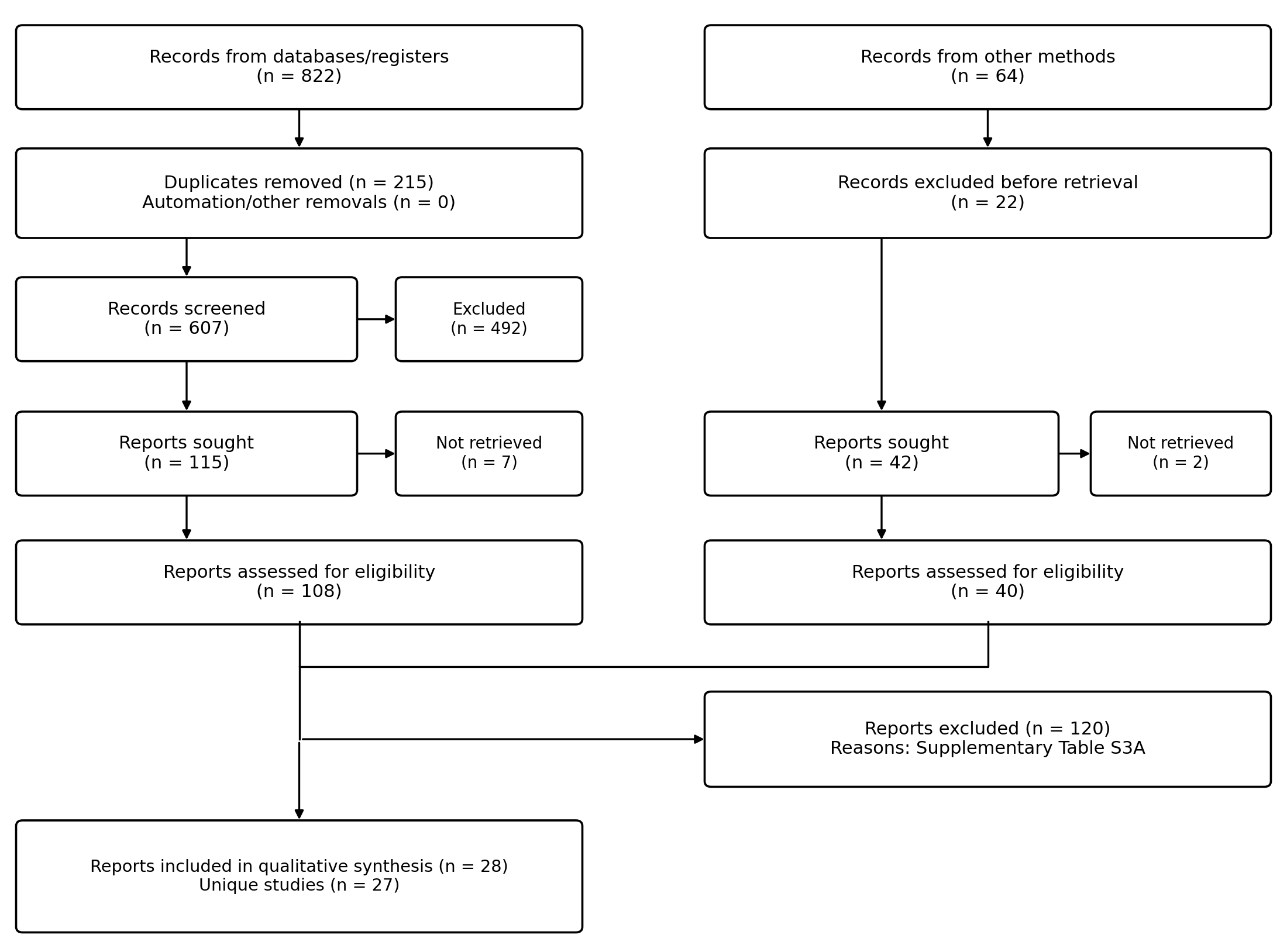
The search flow comprised 822 database or register records and 64 records identified through regulatory documents, publisher websites and citation searching. Of the database/register records, 215 duplicates were removed, leaving 607 records for title and abstract screening; 492 were excluded, 115 reports were sought, 7 were not retrieved and 108 were assessed for eligibility. Of the 64 records identified through other methods, 22 were excluded before retrieval, 42 reports were sought, 2 were not retrieved and 40 were assessed.
Across both routes, 148 reports were assessed for eligibility. Of these, 120 were excluded and 28 reports, corresponding to 27 unique studies, were retained in the qualitative synthesis. All included reports were classified according to the review-specific personalization framework. The main reasons for exclusion were preclinical or association-only design, absence of a microbiome-directed intervention, narrative design, duplicate or non-extractable reporting, and insufficient intervention, product or outcome information. The study-selection process is shown in Figure 1; detailed exclusion categories and contextual reports are provided in Supplementary Tables S3A and S3B.
Figure 1. Study selection flow after eligibility reconciliation. Six reports initially excluded at full-text screening were reassessed and retained; the counts shown are those of the reconciled evidence set.
The 27 unique studies represented by 28 eligible reports were unevenly distributed across four clinical areas. Recurrent CDI was supported by seven unique studies reported in eight publications, including a linked multi-omics analysis of PUNCH CD3. Oncology evidence was mainly early phase or based on small randomized studies. Ulcerative colitis was represented by seven randomized trials with heterogeneous protocols, while MDRO evidence combined prospective studies, mechanistic trials and a randomized open-label trial in which the decolonization effect did not reach statistical significance.
Only a minority of studies prospectively used donor or treatment characteristics to tailor therapy; most generated personalization-enabling evidence or provided non-personalized comparator data. Study summaries, including reported personalization classification, are provided in Supplementary Table S2. At the unique-study level, 4 of the 27 included studies were classified as prospective donor-informed interventions, 14 as personalization-enabling studies, and 9 as non-personalized indication-specific comparator studies. The clinical and linked multi-omics reports from PUNCH CD3 were counted as one unique personalization-enabling study.
Table 3 summarizes the clinical evidence and its personalization context. Reproducibility is strongest where indication, product manufacturing, timing and endpoint are standardized. Personalization requires an additional step: prospective selection or adaptation based on donor, recipient or longitudinal features and evidence that this tailored strategy improves clinical outcomes over non-tailored care.
Table 3. Evidence map by clinical area and personalization context
| Area | Evidence volume | Dominant design | Intervention focus | Interpretation |
|---|---|---|---|---|
| rCDI | 7 unique studies / 8 reports | Randomized trials, standardized products and linked multi-omics analyses | Conventional donor FMT; SER-109/VOWST; RBX2660/REBYOTA; VE303 | Most mature disease-specific evidence; standardization currently exceeds patient-level personalization. |
| Oncology/immunotherapy | 8 unique studies / 8 reports | Phase I/II trials, small randomized studies and responder-donor FMT | FMT plus anti-PD-1/ICI; CBM588 adjunctive strategies | Closest to prospective donor-based personalization, but matching algorithms are not clinically validated. |
| Ulcerative colitis | 7 unique studies / 7 reports | Randomized trials with heterogeneous donor selection, route, intensity and ecological support | Donor FMT, oral lyophilized FMT and fiber-supported strategies | Donor and protocol effects support personalization potential; no validated recipient-matching strategy. |
| MDRO decolonization | 5 unique studies / 5 reports | Prospective studies, mechanistic trials and a randomized controlled trial | FMT for MDRO carriage, resistome reduction and infection-related outcomes | Population- and resistome-directed concepts remain experimental. |
| Abbreviations: FMT, fecal microbiota transplantation; ICI, immune checkpoint inhibitor; LBP, live biotherapeutic product; MDRO, multidrug-resistant organism; rCDI, recurrent Clostridioides difficile infection. | ||||
Early randomized trials established that donor FMT can be highly effective for recurrent CDI. Van Nood et al. reported resolution in 81% after one duodenal infusion and 94% after repeat infusion, compared with 31% with vancomycin alone and 23% with vancomycin plus bowel lavage (9). Colonoscopic FMT achieved resolution in 90% versus 26% with vancomycin in the Cammarota trial (10), and donor FMT was superior to autologous FMT in the Kelly trial (90.9% vs 62.5% clinical cure) (11). However, Hota et al. found no superiority of a single enema FMT after vancomycin over a six-week vancomycin taper; recurrence occurred in 56.2% and 41.7%, respectively (12).
Standardized products strengthened the evidence for secondary prevention after antibacterial treatment. SER-109 reduced recurrence by week 8 from 39.8% with placebo to 12.4% (13). RBX2660/REBYOTA increased treatment success compared with placebo in PUNCH CD3, while VE303 demonstrated a dose-dependent signal, with recurrence in 13.8% of the high-dose group versus 45.5% with placebo (14, 15). A linked PUNCH CD3 analysis showed restoration of microbial community structure and bile-acid composition after fecal microbiota, live-jslm (16).
The rCDI evidence is comparatively mature because the clinical endpoint is explicit and biological restoration of colonization resistance is plausible. Nevertheless, current clinical use is primarily indication-specific and product- or protocol-standardized rather than recipient-matched. Conventional FMT trials varied in donor source, delivery route, retreatment rules and antibiotic comparators, and none validated a prospective donor-recipient matching algorithm.
Oncology evidence is biologically persuasive but clinically less mature. Davar et al. and Baruch et al. illustrate prospective responder-donor selection: fecal material was selected from patients who had responded to anti-PD-1 therapy and administered to refractory melanoma recipients. Both studies were small and non-randomized, and donor-response status was not combined with a validated recipient-selection algorithm (17, 18).
Additional studies broadened the clinical context. Routy et al. reported a phase I safety and activity signal in advanced melanoma (19), and Kim et al. evaluated responder-donor FMT with anti-PD-1 therapy in refractory solid cancers (20). MET4-IO tested a defined microbial consortium with immune checkpoint inhibitors (21), while Halsey et al. evaluated FMT for refractory immune-checkpoint-inhibitor colitis (22). These heterogeneous studies support further investigation but do not establish broad routine use.
CBM588 trials show a second route, defined live bacterial supplementation rather than donor-derived FMT. The clinical signal is promising, yet the mechanism is not linear and the primary microbiome endpoints have not always aligned with response (23, 24).
Ulcerative colitis trials demonstrated heterogeneous effects from the outset. Moayyedi et al. reported remission in 24% with donor FMT versus 5% with placebo at week 7, with an apparent donor effect (25). Rossen et al. found no statistically significant difference in the composite of clinical remission and endoscopic response at week 12 (30.4% vs 20.0%) (26). Later trials by Paramsothy et al. and Costello et al. supported active donor FMT; Costello et al. reported steroid-free remission at 8 weeks in 32% versus 9% with autologous control (27, 28).
LOTUS suggested that antibiotic priming followed by oral lyophilized FMT can induce remission, whereas RESTORE-UC was halted for futility despite rigorous donor selection (29, 30). MINDFUL-related data indicated that donor composition and fiber can shape strain engraftment, but fiber support did not guarantee additional clinical benefit (31).
The UC evidence shows that FMT is not a single interchangeable intervention. Donor composition, recipient inflammatory phenotype, pretreatment, route, dose intensity, endpoint definition and ecological support can materially alter both engraftment and clinical response. These findings support protocol-level and donor-informed personalization, but no trial prospectively validated a recipient-specific matching rule that outperformed non-tailored allocation.
MDRO decolonization is mechanistically plausible because restoration of colonization resistance may reduce pathogenic niches and antimicrobial-resistance gene burden. Prospective and mechanistic human studies reported possible reductions in MDRO carriage, resistome burden or antibiotic-resistance genes (32–35).
Randomized evidence remains limited. Huttner et al. conducted an open-label randomized trial evaluating a 5-day course of non-absorbable antibiotics followed by FMT for intestinal decolonization of ESBL-E/CPE carriers. Decolonization occurred more frequently in the intervention group, although the difference was not statistically significant (36).
For this area, personalization should be based on organism, resistome, host risk and intended clinical benefit rather than colonization status alone. Trials should prioritize infection incidence, antibiotic exposure, bacteremia, hospitalization and mortality in clearly defined populations such as hematology/HSCT, ICU, CRE/VRE carriers and pre-transplant cohorts, and should test whether organism- or resistome-informed selection improves these outcomes.
Across the 27 included studies, prospective personalization was uncommon. The strongest example was responder-donor selection in refractory melanoma. In ulcerative colitis, donor effects, anaerobic processing, antibiotic priming, fiber support and repeat dosing represented protocol-level tailoring. In recurrent CDI, disease indication, recurrence history and standardized product selection determined treatment, but patient-level donor matching was not established. MDRO studies selected high-risk colonized populations and measured resistome changes without validating organism-specific allocation algorithms.
Most evidence was personalization-enabling rather than prospectively personalized. Longitudinal bile-acid and microbiome changes were examined after treatment for recurrent CDI (16). Diet studies provided contextual evidence on microbiome–immune interactions and prediction of glycemic responses (37, 38), while melanoma cohorts linked microbiome features with anti-PD-1 response (39, 40). These findings do not establish a validated treatment-allocation rule.
No included study validated a universal clinical algorithm that combined donor and recipient features to select a microbiome intervention prospectively and improve outcomes over non-tailored care. Consumer microbiome tests and empiric probiotics should therefore not be used as substitutes for validated personalization. Colonization resistance to probiotics differs across individuals and is not equivalent to a proven biotherapeutic effect (4, 41, 42).
Table 4 distinguishes donor- and protocol-informed treatment from exploratory or enabling evidence. The current field is dominated by indication- and protocol-level tailoring; validated patient-specific matching remains a research objective.
Table 4. Personalization domains and clinical readiness across indications
| Clinical area | Prospective donor/protocol selection | Personalization-enabling variables | Clinical interpretation |
|---|---|---|---|
| Recurrent CDI | Primarily indication- and recurrence-based product or protocol selection; repeat FMT permitted in some trials. | Donor source, route, pretreatment, engraftment, community restoration and bile-acid recovery. | Clinically mature standardization, but no validated patient-level donor matching. |
| Oncology / immunotherapy | Responder-donor selection in refractory melanoma; disease- and regimen-specific FMT or LBP combinations. | Baseline and longitudinal metagenomics, donor-strain engraftment, immune signatures and tumor context. | Closest to prospective donor-based personalization; still investigational and not algorithmically validated. |
| Ulcerative colitis | Selected donors, anaerobic preparation, antibiotic priming, oral delivery, fiber support and repeat dosing. | Donor effect, recipient inflammatory phenotype, strain engraftment and ecological support. | Protocol- and donor-informed tailoring; no validated recipient-specific matching rule. |
| MDRO decolonization | Selection of colonized or high-risk populations; no prospectively validated organism-specific allocation. | Baseline organism, resistome, strain replacement, antibiotic exposure and transplant or ICU context. | Experimental; clinical benefit and personalization strategy remain uncertain. |
| Cross-cutting evidence | No clinically validated treatment-allocation algorithm. | Baseline and longitudinal metagenomics/metabolomics, diet, probiotic colonization and host features. | Personalization-enabling only; unsuitable for routine decision-making without prospective validation. |
| Abbreviations: CDI, Clostridioides difficile infection; FMT, fecal microbiota transplantation; ICI, immune checkpoint inhibitor; LBP, live biotherapeutic product; MDRO, multidrug-resistant organism. | |||
The most commonly reported treatment-emergent events were gastrointestinal symptoms. Early recurrent-CDI trials reported adverse events under different FMT protocols (9–12); standardized product trials provided additional comparative safety data (13–15). In ulcerative colitis, serious events occurred in both treatment and control groups, with samples too small to exclude rare harms (27–30). Early FMT studies in oncology were also too small for precise comparative safety estimates (17–20). The CBM588 trials reported no significant between-group toxicity difference (23, 24), while MDRO studies remained limited by small samples and heterogeneous designs (32, 34, 36).
Donor-derived interventions carry risks not captured by short randomized follow-up, particularly transmission of bacterial, viral or other pathogenic agents. FDA safety communications therefore reinforce the need for donor screening, quarantine, traceability and active post-treatment surveillance (6). Safety findings for each study are summarized in Supplementary Table S2.
The appraisal distinguishes study designs rather than assigning domain-level ratings. Open-label allocation, incomplete outcome data and potential confounding are considered study by study. Small samples, surrogate endpoints, heterogeneous protocols and short follow-up further limit precision and applicability, although these features concern the interpretation of effect estimates rather than internal validity. Supplementary Table S4 presents the appraisal in full.
Table 5 summarizes the structured appraisal by evidence block. The categories are descriptive judgements of methodological limitation and are not equivalent to formal RoB 2 or ROBINS-I ratings.
Table 5. Structured methodological limitations by evidence block
| Evidence block | Dominant design | Overall methodological limitations | Main reasons |
|---|---|---|---|
| rCDI conventional FMT and standardized products | Randomized trials; one linked secondary analysis | Some limitations | Open-label designs in several early trials, early stopping, heterogeneous comparators and limited power for rare harms. |
| Oncology FMT/LBP | Early-phase and selected randomized studies | Major limitations | Small samples, open-label elements, heterogeneous tumors, confounding and immature hard endpoints. |
| Ulcerative colitis FMT | Randomized trials | Some limitations | Regimen and donor heterogeneity, short follow-up, inconsistent endpoints and imprecision. |
| MDRO decolonization | Prospective studies, mechanistic trials and an open-label randomized controlled trial | Major limitations | Natural fluctuation of colonization, surrogate outcomes, mixed controlled evidence and imprecision. |
| Abbreviations: FMT, fecal microbiota transplantation; LBP, live biotherapeutic product; MDRO, multidrug-resistant organism; rCDI, recurrent Clostridioides difficile infection; RCT, randomized controlled trial. | |||
Confidence was greatest when randomized clinical endpoints, biological plausibility and regulatory assessment were aligned. Confidence was reduced when evidence depended on small early-phase studies, heterogeneous intervention protocols, inconsistent findings, surrogate outcomes or wide uncertainty. Formal publication-bias testing was not possible because too few sufficiently comparable studies were available within each outcome.
Table 6 presents the domain-by-domain evidence-confidence profile without assigning formal GRADE certainty categories. The most dependable clinical evidence concerns recurrent CDI, whereas oncology, ulcerative colitis and MDRO decolonization require further confirmatory trials.
Table 6. Evidence-confidence profile by clinical outcome
| Outcome | Risk of bias | Inconsistency | Indirectness | Imprecision | Narrative confidence and interpretation |
|---|---|---|---|---|---|
| rCDI recurrence prevention | Appraised descriptively | Some variation by route, product and comparator | Low for prevention after SOC antibiotics | Greater for smaller conventional FMT trials; less for pivotal products | Higher confidence than other indications; supports indication-specific use after antibacterial treatment. |
| rCDI microbiome and metabolome restoration | Appraised descriptively | Platform and time-point variation | Mechanistic outcomes are indirect for durable clinical benefit | Moderate sample limitations | Supportive mechanistic bridge, not a substitute for clinical recurrence outcomes. |
| Oncology FMT/LBP with ICI | Appraised descriptively | Tumor type, donor, product and regimen heterogeneity | Hard clinical endpoints often secondary or immature | Marked imprecision | Limited confidence; investigational only. |
| Ulcerative colitis donor FMT | Appraised descriptively | Direction and magnitude vary across trials | Protocol-specific effects limit generalizability | Small trials and wide uncertainty | Limited confidence; requires optimized, disease-specific protocols. |
| MDRO decolonization | Appraised descriptively | Controlled and uncontrolled findings conflict | Colonization and resistome outcomes may not predict infection benefit | Marked imprecision | Very limited confidence; clinical utility remains uncertain. |
Most included studies evaluated indication-specific products or protocols rather than recipient-specific matching. Recurrent CDI has multiple randomized comparisons of conventional FMT (9–11) and standardized products (13–15). However, the negative Hota trial cautions against treating all delivery protocols as interchangeable (12). This clinical maturity supports indication-specific treatment, but does not establish the added benefit of donor–recipient matching.
This interpretation agrees with translational microbiome literature emphasizing standardization, product characterization, multi-omics and clinically meaningful endpoints (3–5). It also aligns with the clinical microbiome testing consensus, which argues that microbiome profiles should not be used as routine clinical decision tools without validated analytical and interpretive standards (4).
Personalization currently has its clearest prospective examples in responder-donor selection (17, 18, 20) and microbiologically informed donor selection in ulcerative colitis (30). Recipient-level matching remains exploratory. Dietary and glycemic-response studies offer contextual models for prediction (37, 38), while oncology cohorts demonstrate response associations (39, 40). Probiotic colonization studies and strain-level research further illustrate biological variability (41–43); none establishes a universal donor–recipient treatment algorithm.
A clinically credible personalization strategy should be prespecified, reproducible and comparative. It should define the variable used for treatment allocation, demonstrate analytical validity, and show that the tailored strategy improves a patient-important clinical outcome over a non-tailored alternative. Post hoc associations between microbiome features and response are valuable for hypothesis generation but should not be described as validated personalized treatment.
The third finding concerns safety and regulation. Donor-derived ecological efficacy must be converted into controlled manufacturing without losing biological activity. Donor screening, quarantine, traceability, pathogen surveillance and postmarketing monitoring are components of the therapeutic benefit-risk balance rather than administrative details (1, 2, 6).
The practical consequence is that success in recurrent CDI should not be generalized automatically to oncology, ulcerative colitis or MDRO decolonization. Each area requires its own trial architecture, disease-specific comparator, predefined clinical endpoint and prospectively specified microbiome and metabolomic analyses.
The review was not prospectively registered in PROSPERO. Six reports were reclassified as eligible during reconciliation, and no sensitivity analysis was performed around this decision. Source-level export files and screening decisions are not published as supplementary material, so the search cannot be reproduced record by record under PRISMA-S. Embase and Web of Science were not searched, which may have limited coverage of subscription-indexed and conference-only records.
Risk of bias and certainty of evidence were appraised descriptively rather than through complete RoB 2, ROBINS-I and GRADE procedures. Meta-analysis was not performed because of substantial heterogeneity in indications, interventions, analytical methods and outcomes. Several included studies were early phase, non-randomized or small, with heterogeneous safety reporting and limited follow-up. Personalization was defined inconsistently across studies and was frequently exploratory or post hoc, so the category counts describe how tailoring was reported rather than how far it has been validated. Non-personalized indication-specific trials were retained as comparator evidence in order to assess the potential added value of personalized approaches.
For recurrent CDI, current practice should use approved indication-specific products or established FMT protocols; available evidence does not justify commercial patient-level donor matching. Personalized trials should prospectively define the tailoring variable, analytical platform, decision rule and non-tailored comparator before recruitment. Oncology studies should compare responder-donor, healthy-donor and defined-product strategies within disease-specific randomized designs and validate recipient-selection signatures. Ulcerative colitis trials should distinguish donor selection, recipient inflammatory phenotype, ecological conditioning and adaptive retreatment rather than treating FMT as a generic intervention. MDRO trials should test organism- and resistome-informed allocation against clinical infection outcomes, antibiotic use, bacteremia, hospitalization and mortality. Consumer microbiome profiles should not guide treatment unless analytical validity, clinical validity and incremental clinical utility are demonstrated.
Personalized microbiome biotherapeutics should be treated as a spectrum of indication-specific standardization, donor- or protocol-informed tailoring and patient-level matching. Current evidence most strongly supports microbiota-based prevention of recurrent CDI after antibacterial treatment, but this evidence does not establish individualized donor-recipient allocation. Prospective donor selection is evident in responder-donor oncology studies and selected ulcerative colitis trials, yet no validated algorithm has demonstrated superiority over non-tailored care. Routine adoption requires disease-specific randomized validation, explicit decision rules, standardized safety surveillance and prospectively specified clinical and multi-omics endpoints.
Author contributions: MS: Conceptualization, Methodology, Investigation, Data curation, Formal analysis, and Writing – original draft. ShT: Methodology, Investigation, Data curation, and Writing – review and editing. OV: Formal analysis, Validation, Supervision, and Writing – review and editing. AS: Project administration and Writing – review and editing. All authors have read and approved the final manuscript and agree to be accountable for all aspects of the work.
Funding: This review was prepared without external funding.
Conflicts of interest: The authors declare no conflicts of interest related to this work.
Acknowledgments: The authors thank the investigators whose published trials and cohorts form the evidence base of this review, and acknowledge the developers of the PRISMA 2020 statement, which shaped its reporting structure.
Data availability statement: Tables S1–S5 contain the search strategies, study-level summaries, exclusion categories and descriptive appraisals supporting this review. Record-level export files, screening and extraction sheets and completed appraisal forms are not included in the supplementary material. The aggregate counts reported in the text and in Figure 1 correspond to the reconciled evidence set.
AI use statement: ChatGPT (OpenAI) was used for language editing, internal consistency checks, citation placement and formatting. It was not used to run a new systematic search or to perform a formal risk-of-bias assessment. The authors verified the revised text and are responsible for the content of all declarations.
U.S. Food and Drug Administration. VOWST (fecal microbiota spores, live-brpk) [Internet]. Silver Spring (MD): U.S. Food and Drug Administration; 2023 [cited 2026 Jan 29]. Available from: https://www.fda.gov/vaccines-blood-biologics/vowst
U.S. Food and Drug Administration. CBER 2022 orphan approvals (new BLAs): REBYOTA [Internet]. Silver Spring (MD): U.S. Food and Drug Administration; 2023. Available from: https://www.fda.gov/vaccines-blood-biologics/cber-2022-orphan-approvals-new-blas
Gilbert JA, Azad MB, Bäckhed F, et al. Clinical translation of microbiome research. Nat Med. 2025;31:1099-1113. doi:10.1038/s41591-025-03615-9.
Porcari S, Mullish BH, Asnicar F, et al. International consensus statement on microbiome testing in clinical practice. Lancet Gastroenterol Hepatol. 2025;10:154-167. doi:10.1016/S2468-1253(24)00311-X.
Zitvogel L, Derosa L, Routy B, et al. Impact of the ONCOBIOME network in cancer microbiome research. Nat Med. 2025;31:1085-1098. doi:10.1038/s41591-025-03608-8.
U.S. Food and Drug Administration. Fecal microbiota products [Internet]. Silver Spring (MD): U.S. Food and Drug Administration; [cited 2026 Jan 29]. Available from: https://www.fda.gov/vaccines-blood-biologics/fecal-microbiota-products
Page MJ, McKenzie JE, Bossuyt PM, et al. The PRISMA 2020 statement: an updated guideline for reporting systematic reviews. BMJ. 2021;372:n71. doi:10.1136/bmj.n71.
Page MJ, Moher D, Bossuyt PM, et al. PRISMA 2020 explanation and elaboration: updated guidance and exemplars for reporting systematic reviews. BMJ. 2021;372:n160. doi:10.1136/bmj.n160.
van Nood E, Vrieze A, Nieuwdorp M, et al. Duodenal infusion of donor feces for recurrent Clostridium difficile. N Engl J Med. 2013;368:407-415. doi:10.1056/NEJMoa1205037.
Cammarota G, Masucci L, Ianiro G, et al. Randomised clinical trial: faecal microbiota transplantation by colonoscopy versus vancomycin for recurrent Clostridium difficile infection. Aliment Pharmacol Ther. 2015;41:835-843. doi:10.1111/apt.13144.
Kelly CR, Khoruts A, Staley C, et al. Effect of fecal microbiota transplantation on recurrence in multiply recurrent Clostridium difficile infection: a randomized trial. Ann Intern Med. 2016;165:609-616. doi:10.7326/M16-0271.
Hota SS, Sales V, Tomlinson G, et al. Oral vancomycin followed by fecal transplantation versus tapering oral vancomycin treatment for recurrent Clostridium difficile infection: an open-label, randomized controlled trial. Clin Infect Dis. 2017;64:265-271. doi:10.1093/cid/ciw731.
Feuerstadt P, Louie TJ, Lashner B, et al. SER-109, an oral microbiome therapy for recurrent Clostridioides difficile infection. N Engl J Med. 2022;386:220-229. doi:10.1056/NEJMoa2106516.
Khanna S, Assi M, Lee C, et al. Efficacy and safety of RBX2660 in PUNCH CD3, a phase III randomized, double-blind, placebo-controlled trial for prevention of recurrent Clostridioides difficile infection. Drugs. 2022;82:1527-1538. doi:10.1007/s40265-022-01797-x.
Louie TJ, Golan Y, Khanna S, et al. VE303, a defined bacterial consortium, for prevention of recurrent Clostridioides difficile infection: a randomized clinical trial. JAMA. 2023;329:1356-1366. doi:10.1001/jama.2023.4314.
Blount KF, Papazyan R, Ferdyan N, et al. Microbiome and metabolome restoration after administration of fecal microbiota, live-jslm for preventing recurrent Clostridioides difficile infection. J Infect Dis. 2025;231:e1022-e1033. doi:10.1093/infdis/jiae418.
Davar D, Dzutsev AK, McCulloch JA, et al. Fecal microbiota transplant overcomes resistance to anti-PD-1 therapy in melanoma patients. Science. 2021;371:595-602. doi:10.1126/science.abf3363.
Baruch EN, Youngster I, Ben-Betzalel G, et al. Fecal microbiota transplant promotes response in immunotherapy-refractory melanoma patients. Science. 2021;371:602-609. doi:10.1126/science.abb5920.
Routy B, Lenehan JG, Miller WH, et al. Fecal microbiota transplantation plus anti-PD-1 immunotherapy in advanced melanoma: a phase I trial. Nat Med. 2023;29:2121-2132. doi:10.1038/s41591-023-02453-x.
Kim Y, Park S, Lee J, et al. Fecal microbiota transplantation improves anti-PD-1 inhibitor efficacy in unresectable or metastatic solid cancers refractory to anti-PD-1 inhibitor. Cell Host Microbe. 2024;32(8):1380-1393.e9. doi:10.1016/j.chom.2024.06.010.
Spreafico A, Heirali AA, Araujo DV, et al. First-in-class Microbial Ecosystem Therapeutic 4 (MET4) in combination with immune checkpoint inhibitors in patients with advanced solid tumors (MET4-IO trial). Ann Oncol. 2023;34(6):520-530. doi:10.1016/j.annonc.2023.02.011.
Halsey TM, Thomas AS, Hayase T, et al. Microbiome alteration via fecal microbiota transplantation is effective for refractory immune checkpoint inhibitor-induced colitis. Sci Transl Med. 2023;15(700):eabq4006. doi:10.1126/scitranslmed.abq4006.
Dizman N, Meza L, Bergerot P, et al. Nivolumab plus ipilimumab with or without live bacterial supplementation with CBM588 in metastatic renal cell carcinoma: a randomized phase 1 trial. Nat Med. 2022;28:704-712. doi:10.1038/s41591-022-01694-6.
Ebrahimi H, Dizman N, Meza L, et al. Cabozantinib and nivolumab with or without live bacterial supplementation in metastatic renal cell carcinoma: a randomized phase 1 trial. Nat Med. 2024;30:2576-2585. doi:10.1038/s41591-024-03086-4.
Moayyedi P, Surette MG, Kim PT, et al. Fecal microbiota transplantation induces remission in patients with active ulcerative colitis in a randomized controlled trial. Gastroenterology. 2015;149:102-109.e6. doi:10.1053/j.gastro.2015.04.001.
Rossen NG, Fuentes S, van der Spek MJ, et al. Findings from a randomized controlled trial of fecal transplantation for patients with ulcerative colitis. Gastroenterology. 2015;149:110-118.e4. doi:10.1053/j.gastro.2015.03.045.
Paramsothy S, Kamm MA, Kaakoush NO, et al. Multidonor intensive fecal microbiota transplantation for active ulcerative colitis: a randomized placebo-controlled trial. Lancet. 2017;389:1218-1228. doi:10.1016/S0140-6736(17)30182-4.
Costello SP, Hughes PA, Waters O, et al. Effect of fecal microbiota transplantation on 8-week remission in patients with ulcerative colitis: a randomized clinical trial. JAMA. 2019;321:156-164. doi:10.1001/jama.2018.20046.
Haifer C, Paramsothy S, Kaakoush NO, et al. Lyophilised oral fecal microbiota transplantation for ulcerative colitis (LOTUS): a randomized, double-blind, placebo-controlled trial. Lancet Gastroenterol Hepatol. 2022;7:141-151. doi:10.1016/S2468-1253(21)00400-3.
Caenepeel C, Deleu S, Vazquez Castellanos JF, et al. Rigorous donor selection for fecal microbiota transplantation in active ulcerative colitis: lessons from a randomized trial halted for futility. Clin Gastroenterol Hepatol. 2025;23:621-631.e7. doi:10.1016/j.cgh.2024.05.017.
Gogokhia L, Tran N, Grier A, et al. Donor composition and fiber promote strain engraftment in a randomized controlled trial of fecal microbiota transplant for ulcerative colitis. Med (N Y). 2025;6:100707. doi:10.1016/j.medj.2025.100707.
Seong H, Lee SK, Cheon JH, et al. Fecal microbiota transplantation for multidrug-resistant organism: efficacy and response prediction. J Infect. 2020;81:719-725. doi:10.1016/j.jinf.2020.09.003.
Ghani R, Mullish BH, McDonald JAK, et al. Disease prevention not decolonization: a model for fecal microbiota transplantation in patients colonized with multidrug-resistant organisms. Clin Infect Dis. 2021;72:1444-1447. doi:10.1093/cid/ciaa948.
Woodworth MH, Conrad RE, Haldopoulos M, et al. Fecal microbiota transplantation promotes reduction of antimicrobial resistance by strain replacement. Sci Transl Med. 2023;15:eabo2750. doi:10.1126/scitranslmed.abo2750.
Hyun JH, Lee SK, Cheon JH, et al. Faecal microbiota transplantation reduces amounts of antibiotic resistance genes in patients with multidrug-resistant organisms. Antimicrob Resist Infect Control. 2022;11:20. doi:10.1186/s13756-022-01064-4.
Huttner BD, de Lastours V, Wassenberg M, et al. A 5-day course of oral antibiotics followed by faecal transplantation to eradicate carriage of multidrug-resistant Enterobacteriaceae: a randomized clinical trial. Clin Microbiol Infect. 2019;25(7):830-838. doi:10.1016/j.cmi.2018.12.009.
Wastyk HC, Fragiadakis GK, Perelman D, et al. Gut-microbiota-targeted diets modulate human immune status. Cell. 2021;184:4137-4153.e14. doi:10.1016/j.cell.2021.06.019.
Zeevi D, Korem T, Zmora N, et al. Personalized nutrition by prediction of glycemic responses. Cell. 2015;163:1079-1094. doi:10.1016/j.cell.2015.11.001.
Gopalakrishnan V, Spencer CN, Nezi L, et al. Gut microbiome modulates response to anti-PD-1 immunotherapy in melanoma patients. Science. 2018;359:97-103. doi:10.1126/science.aan4236.
Matson V, Fessler J, Bao R, et al. The commensal microbiome is associated with anti-PD-1 efficacy in metastatic melanoma patients. Science. 2018;359:104-108. doi:10.1126/science.aao3290.
Zmora N, Zilberman-Schapira G, Suez J, et al. Personalized gut mucosal colonization resistance to empiric probiotics is associated with unique host and microbiome features. Cell. 2018;174:1388-1405.e21. doi:10.1016/j.cell.2018.08.041.
Suez J, Zmora N, Segal E, Elinav E. The pros, cons, and many unknowns of probiotics. Nat Med. 2019;25:716-729. doi:10.1038/s41591-019-0439-x.
Segata N. On the road to strain-resolved microbiome medicine. Nat Microbiol. 2018;3:1-2. doi:10.1038/s41564-017-0078-5.
Table S1. Search terms and sources
| Source | Last searched / consulted | Search terms / strategy | Notes | Source-specific yield |
|---|---|---|---|---|
| PubMed/MEDLINE | 2 February 2026 | ((microbiome[Title/Abstract] OR microbiota[Title/Abstract] OR "gut microbiome"[Title/Abstract] OR "fecal microbiota transplantation"[Title/Abstract] OR FMT[Title/Abstract] OR "live biotherapeutic"[Title/Abstract]) AND (randomized[Title/Abstract] OR trial[Title/Abstract] OR prospective[Title/Abstract] OR phase[Title/Abstract] OR intervention[Title/Abstract]) AND ("Clostridioides difficile"[Title/Abstract] OR CDI[Title/Abstract] OR immunotherapy[Title/Abstract] OR "immune checkpoint"[Title/Abstract] OR melanoma[Title/Abstract] OR "renal cell carcinoma"[Title/Abstract] OR "ulcerative colitis"[Title/Abstract] OR MDRO[Title/Abstract] OR "multidrug-resistant"[Title/Abstract] OR decolonization[Title/Abstract])) | Searched from inception; no date restriction; human clinical focus. | Included in the aggregate database/register yield (n = 822) |
| Cochrane CENTRAL | 2 February 2026 | (microbiome OR microbiota OR FMT OR fecal microbiota transplantation OR live biotherapeutic) AND (Clostridioides difficile OR immunotherapy OR ulcerative colitis OR MDRO) | Searched from inception; trials and controlled clinical studies. | Included in the aggregate database/register yield (n = 822) |
| ClinicalTrials.gov | 2 February 2026 | microbiome OR microbiota OR FMT OR fecal microbiota transplantation OR live biotherapeutic; filters – Interventional Studies; Clostridioides difficile OR immunotherapy OR ulcerative colitis OR multidrug-resistant organism | Searched from inception; interventional records and linked publications. | Included in the aggregate database/register yield (n = 822) |
| FDA/CBER regulatory pages | 29 January 2026 | VOWST OR SER-109 OR fecal microbiota spores live-brpk; REBYOTA OR RBX2660 OR fecal microbiota live-jslm; FMT safety alert; donor screening | Regulatory product information and safety communications; part of the 64 additional-source records. | Included in the aggregate additional-source yield (n = 64) |
| Publisher websites and citation searching | 2 February 2026 | Targeted searches for VOWST/SER-109, REBYOTA/RBX2660, VE303, responder-donor FMT, MET4-IO, and FMT for immune-checkpoint-inhibitor colitis, CBM588, LOTUS, RESTORE-UC and MDRO decolonization trials in Nature Portfolio, JAMA Network, The Lancet, Cell Press and Science/AAAS, followed by backward reference checking and forward citation tracking. | Additional-source search; included in the aggregate 64 records identified through other methods. | Included in the aggregate additional-source yield (n = 64) |
Note: Source-specific yields are reported in aggregate within the selection flow. PubMed field tags have been normalized editorially for presentation.
Abbreviations: CBER, Center for Biologics Evaluation and Research; CENTRAL, Cochrane Central Register of Controlled Trials; CDI, Clostridioides difficile infection; FDA, US Food and Drug Administration; FMT, fecal microbiota transplantation; MDRO, multidrug-resistant organism.
Table S2. Study-level characteristics, outcomes, safety, and personalization features
| Area | Study / design / n | Intervention / comparator; regimen / follow-up | Primary endpoint / main result | Safety | Personalization category | Personalization features / platform / funding-COI |
|---|---|---|---|---|---|---|
| rCDI | van Nood et al., 2013 (9); open-label RCT; n=43 randomized | Donor FMT after short vancomycin + bowel lavage vs vancomycin alone or vancomycin + lavage; duodenal infusion; repeat FMT permitted; 10 weeks | Resolution without relapse: 81% after 1 FMT; 94% after repeat FMT vs 31% and 23% in controls | Transient diarrhea/cramping; no consistent treatment-related SAE signal | Non-personalized comparator evidence | Response-guided retreatment; no donor-recipient matching; 16S rRNA profiling; public/academic funding; no reported manufacturer role |
| rCDI | Cammarota et al., 2015 (10); open-label RCT; n=39 | Donor FMT vs vancomycin; colonoscopic FMT with clinically/endoscopically guided retreatment; 10 weeks | Resolution of recurrent CDI: 90% vs 26% | No significant treatment-related SAEs reported | Non-personalized comparator evidence | Protocol-level retreatment; no donor-recipient matching; microbiome profiling not primary; academic investigator-led |
| rCDI | Kelly et al., 2016 (11); double-blind RCT; n=46 | Donor vs autologous FMT; single colonoscopic administration; 8 weeks | Clinical cure without recurrence: 90.9% vs 62.5%; P=0.042 | No FMT-related SAE identified | Personalization-enabling study | Donor engraftment/recipient community changes assessed but not used for allocation; 16S rRNA; public/academic funding |
| rCDI | Hota et al., 2017 (12); open-label RCT; n=30 randomized, 28 analyzed | 14-day vancomycin + single donor FMT vs 6-week vancomycin taper; enema; 120 days | CDI recurrence: 56.2% vs 41.7%; FMT not superior | No major differential safety signal; small sample | Non-personalized comparator evidence | Fixed donor-FMT strategy; no prospective matching; 16S-based diversity analysis; public/academic funding |
| rCDI | Feuerstadt et al., 2022; ECOSPOR III (13); phase III RCT; n=182 | SER-109 vs placebo after SOC antibiotics; oral purified Firmicutes spores daily ×3 days; week 8 | CDI recurrence: 12.4% vs 39.8%; RR 0.32 | Mainly mild/moderate GI AEs; no treatment-related SAEs | Non-personalized comparator evidence | Standardized indication-/recurrence-based product; no recipient matching; species-level engraftment; Seres-sponsored; manufacturer/author COI disclosed |
| rCDI | Khanna et al., 2022; PUNCH CD3 (14); phase III RCT; n=267 | RBX2660/REBYOTA vs placebo after antibiotics; single rectal dose; week 8; follow-up to 6 months | Treatment success: 70.6% vs 57.5%; absolute difference 13.1 percentage points; posterior probability of superiority 0.991 | Abdominal pain/diarrhea most common; no serious treatment-related AEs | Personalization-enabling study | Standardized donor-derived product; no recipient matching; linked microbiome/metabolome analysis (16); Rebiotix/Ferring-sponsored; relevant employee/investigator relationships disclosed |
| rCDI | Louie et al., 2023 (15); phase II RCT; n=79 | High-/low-dose VE303 vs placebo; oral defined consortium after antibiotics; 8 weeks | CDI recurrence: 13.8% high dose, 37.0% low dose, 45.5% placebo | High dose generally well tolerated; GI AEs predominated | Non-personalized comparator evidence | Prospective dose comparison without biomarker-based allocation; defined-strain tracking; Vedanta-sponsored; developer involvement/COI disclosed |
| rCDI | Blount et al., 2025 (16); linked PUNCH CD3 multi-omics analysis | REBYOTA vs placebo samples; longitudinal stool sampling after single rectal dose | Microbiome/bile-acid restoration: responders showed community and secondary bile-acid profiles shifting toward a non-CDI state | No independent clinical safety estimate; linked mechanistic analysis | Personalization-enabling study | Longitudinal microbial/metabolic signatures did not guide treatment; sequencing + LC-MS metabolomics; Ferring-supported; relevant company relationships disclosed |
| Oncology | Davar et al., 2021 (17); phase I; n=15 | FMT from anti-PD-1 responder donors + pembrolizumab; pembrolizumab re-challenge; longitudinal follow-up | Clinical benefit in refractory melanoma: 6/15, including objective responses and prolonged stabilization | Feasible; sample too small for comparative safety estimates | Prospective donor-informed intervention | Donors selected prospectively by prior anti-PD-1 response; no validated recipient-matching algorithm; shotgun metagenomics + immune profiling; academic/translational funding; relevant IP/consulting COI |
| Oncology | Baruch et al., 2021 (18); phase I; n=10 | Responder-donor FMT + anti-PD-1 reinduction; antibiotic conditioning; colonoscopic + oral FMT; longitudinal follow-up | Objective response/durable benefit: 3/10 objective responses | No dominant new safety signal; very small sample | Prospective donor-informed intervention | Donors selected by prior anti-PD-1 response; metagenomic + immune profiling; academic investigator-led funding |
| Oncology | Routy et al., 2023 (19); multicenter phase I; n=20 | Healthy-donor FMT + nivolumab/pembrolizumab; FMT before and during anti-PD-1 therapy | Safety, response, engraftment: ORR 65% (13/20); CR 20% (4/20) | No grade 3 AEs from FMT alone; grade 3 immune-related AEs in 5/20 (25%) during combination therapy | Personalization-enabling study | Donor selection and longitudinal engraftment assessed but did not determine allocation; shotgun metagenomics, metabolomics, immune profiling; academic/philanthropic support; biotechnology disclosures |
| Oncology | Kim et al., 2024 (20); clinical trial; n=13 | Responder-donor FMT plus anti-PD-1 inhibitor in anti-PD-1-refractory advanced solid cancers; oral/clinical protocol; follow-up as reported | Objective response 7.7% (1/13); disease control 46.2% (6/13); sustained microbiome and immune changes in responders | No treatment-related safety estimate beyond the small clinical trial; heterogeneous solid tumors | Prospective donor-informed intervention | Donor selected by prior anti-PD-1 response; microbial and immune correlates assessed; no validated recipient-matching algorithm |
| Oncology | Spreafico et al., 2023 (21); MET4-IO early-phase trial | Defined 30-species microbial consortium with immune checkpoint inhibitors in advanced solid tumors | Primary safety/tolerability outcomes met; ecological changes varied by patient and species | Early-phase study; not powered for comparative clinical efficacy | Personalization-enabling study | Defined-product strategy with longitudinal ecological assessment; no prospective patient-level matching |
| Oncology | Halsey et al., 2023 (22); clinical case series; n=12 | Healthy-donor FMT for grade 3–4 refractory immune-checkpoint-inhibitor colitis | Symptom improvement in 10/12 (83%); clinical remission at study end in 92% | Three patients required repeat FMT; rare harms not estimable | Personalization-enabling study | Donor–recipient microbiome differences associated with response; no validated allocation rule |
| Oncology | Dizman et al., 2022 (23); randomized phase I; n=30 | CBM588 + nivolumab/ipilimumab vs nivolumab/ipilimumab alone; oral supplementation; median follow-up ~12 months | Median PFS: 12.7 vs 2.5 months; HR 0.15; 95% CI 0.05-0.47; P=0.001; response 58% vs 20%; P=0.06 | No significant between-group toxicity difference | Non-personalized comparator evidence | Fixed defined-LBP supplementation; no biomarker-based allocation; 16S/metagenomic endpoints; product-related support/author disclosures |
| Oncology | Ebrahimi et al., 2024 (24); open-label randomized phase I; n=30 | CBM588 + cabozantinib/nivolumab vs cabozantinib/nivolumab alone; oral supplementation; longitudinal follow-up | ORR 74% (14/19) vs 20% (2/10); P=0.01; 6-month PFS 84% vs 60%; primary microbiome endpoint not met | No significant between-group toxicity difference | Non-personalized comparator evidence | Fixed defined-LBP strategy; no recipient matching; longitudinal microbiome profiling; industry/product involvement and relevant author COI disclosed |
| UC | Moayyedi et al., 2015 (25); randomized placebo-controlled trial; n=75 | Donor FMT vs water placebo; weekly retention enema ×6 weeks; endpoint week 7 | Clinical remission: 24% vs 5%; response varied by donor | Overall AE frequency did not differ materially | Personalization-enabling study | Donor-dependent effect without donor-recipient allocation; microbiome profiling; public/academic funding |
| UC | Rossen et al., 2015 (26); double-blind RCT; n=48 | Healthy-donor vs autologous FMT; 2 nasoduodenal infusions 3 weeks apart; week 12 | Clinical remission + endoscopic response: 30.4% vs 20.0%; P=0.51 | Mainly mild, self-limited AEs | Non-personalized comparator evidence | Fixed donor-FMT comparator; no recipient matching; microbiota profiling; academic investigator-led |
| UC | Paramsothy et al., 2017 (27); randomized placebo-controlled trial; n=85 | Intensive multidonor FMT vs placebo; colonoscopic infusion + repeated enemas; 8 weeks | Steroid-free clinical remission with endoscopic remission/response: 27% (11/41) vs 8% (3/40); RR 3.6; 95% CI 1.1-11.9; P=0.021 | AEs 78% vs 83%, mainly transient GI; no significant difference | Personalization-enabling study | Multidonor pooling and donor/recipient microbial features assessed but did not determine allocation; 16S analysis; public/academic funding |
| UC | Costello et al., 2019 (28); randomized clinical trial; n=73 | Anaerobically prepared donor FMT vs autologous FMT; colonoscopy + 2 enemas; 8 weeks | Steroid-free remission: 32% vs 9% | 3 SAEs donor group vs 2 control; causal FMT relationship not established | Personalization-enabling study | Anaerobic processing and donor microbial features informed protocol; no recipient matching; microbiome profiling; public/academic funding |
| UC | Haifer et al., 2022; LOTUS (29); double-blind placebo-controlled RCT; n=35 | 2-week amoxicillin/metronidazole/doxycycline priming + oral lyophilized donor FMT vs placebo for 8 weeks; responders maintained to week 56 | Corticosteroid-free clinical remission with endoscopic remission/response: 53% (8/15) vs 15% (3/20); difference 38.3 percentage points; 95% CI 8.6-68.0; P=0.027 | AEs 67% vs 85%, mainly mild GI; serious events included UC worsening in 2 FMT/1 placebo and rectal bleeding in 1 placebo | Personalization-enabling study | Antibiotic conditioning + response-dependent maintenance; no biomarker-based allocation; longitudinal microbiome profiling; academic/public support |
| UC | Caenepeel et al., 2025; RESTORE-UC (30); multicenter double-blind sham-controlled RCT; n=72 enrolled, 66 treated | 4 anaerobically prepared, rigorously selected allogeneic FMTs vs autologous FMT; repeated administrations; week 8 | Steroid-free clinical remission: 3/30 vs 5/36; P=0.72; trial stopped for futility | Generally well tolerated; no new safety signal | Prospective donor-informed intervention | Donors prospectively selected by microbial cell count, enterotype and specific genera; no validated recipient-matching rule; quantitative microbiome profiling; academic funding |
| UC | Gogokhia et al., 2025; MINDFUL (31); randomized double-blind placebo-controlled trial; n=27 analyzed | Single-donor FMT, FMT + psyllium, or placebo ± fiber; single baseline FMT; 8-week fiber/placebo; 17-week sampling | FMT improved response/remission/endoscopic outcomes vs placebo (P<0.05); fiber added no clinical benefit; trial ended early after product discontinuation | Small sample insufficient for rare harms; no new dominant safety signal | Personalization-enabling study | Donor-dependent engraftment/fiber-associated strains identified but did not guide recipient allocation; strain-resolved metagenomics; NIH/NIDDK funding |
| MDRO | Seong et al., 2020 (32); prospective study; n=35 | FMT for persistent MDRO colonization; protocol-defined FMT; follow-up ≤1 year | MDRO decolonization: 24/35 (68.6%) within 1 year; FMT associated with decolonization, HR 5.343; 95% CI 1.877-15.212; P=0.002 | No precise controlled safety estimate | Personalization-enabling study | MDRO type/baseline microbial characteristics explored as predictors; no validated allocation algorithm; microbiome profiling; academic funding |
| MDRO | Ghani et al., 2021 (33); prospective clinical model/cohort; n=20 treated | FMT in MDRO-colonized/infected patients vs pre-FMT history and matched untreated controls; longitudinal follow-up | Antibiotic duration, bacteremia, hospital stay: significant reductions despite modest decolonization rates | Nonrandomized comparisons/clinical heterogeneity limited benefit-risk inference | Personalization-enabling study | High-risk clinical selection; no validated microbiome/resistome allocation rule; clinical microbiome/resistome context; academic funding |
| MDRO | Woodworth et al., 2023; PREMIX (34); randomized controlled mechanistic study; n=11 | FMT vs observation in renal-transplant MDRO carriers; longitudinal stool sampling | Decolonization/resistome/strain replacement: FMT accelerated decolonization in some participants and reduced AMR via replacement of resistant strains by susceptible strains | Underpowered for definitive clinical safety comparisons | Personalization-enabling study | Baseline strains, donor-strain acquisition and resistome changes assessed; shotgun metagenomics/strain tracking; public/academic funding |
| MDRO | Hyun et al., 2022 (35); prospective mechanistic study; n=27 | FMT in MDRO-colonized patients; stool/resistance-gene assessment through day 28 | ARG burden: culture-independent PCR showed reduced VanA and blaNDM at day 28 (P=0.047/0.048); blaKPC/blaOXA changes were nonsignificant | No controlled comparative safety estimate | Personalization-enabling study | Gene-specific response patterns assessed without prospective allocation algorithm; resistome/qPCR + microbiome analysis; academic funding |
| MDRO | Huttner et al., 2019 (36); randomized open-label superiority trial; n=39 | Oral colistin + neomycin ×5 days followed by frozen donor FMT vs no intervention; assessment days 35-48 | ESBL-E/CPE eradication: 41% (9/22) vs 29% (5/17); OR 1.7; 95% CI 0.4-6.4; NS | Generally well tolerated; 3 discontinued antibiotics because of diarrhea; all subsequently received FMT | Non-personalized comparator evidence | Fixed protocol; no donor-recipient/organism-specific matching; stool culture; EU FP7 funding |
Note: Categories are mutually exclusive. Donor-informed selection is not patient matching; fixed regimens and routine retreatment alone do not qualify. Khanna et al. (14) and Blount et al. (16) are linked PUNCH CD3 reports and were counted as one unique personalization-enabling study.
Abbreviations: AE, adverse event; AMR, antimicrobial resistance; ARG, antibiotic-resistance gene; CDI, Clostridioides difficile infection; CI, confidence interval; COI, conflict of interest; CPE, carbapenemase-producing Enterobacterales; CR, complete response; ESBL-E, extended-spectrum β-lactamase-producing Enterobacterales; FMT, fecal microbiota transplantation; GI, gastrointestinal; HR, hazard ratio; ICI, immune checkpoint inhibitor; LC-MS, liquid chromatography-mass spectrometry; MDRO, multidrug-resistant organism; mRCC, metastatic renal cell carcinoma; NS, not statistically significant; NSCLC, non-small cell lung cancer; ORR, objective response rate; PEG, polyethylene glycol; PFS, progression-free survival; QoL, quality of life; rCDI, recurrent CDI; RCT, randomized controlled trial; RR, risk ratio; SAE, serious adverse event; SOC, standard of care; UC, ulcerative colitis.
Table S3A. Reasons for exclusion after eligibility assessment
| Reason for exclusion | Reports, n |
|---|---|
| Association-only microbiome study without microbiome-directed intervention or extractable clinical endpoint | 39 |
| Preclinical, in vitro or animal-only report | 27 |
| Narrative, editorial or background paper without eligible primary interventional data | 21 |
| Duplicate, secondary or non-extractable report without additional eligible data | 19 |
| Insufficient intervention/product, donor or microbiome-platform detail | 9 |
| Consumer/commercial microbiome testing without clinical validation | 5 |
| Total excluded after eligibility assessment | 120 |
Table S3B. Contextual studies excluded from the clinical evidence synthesis
| Report | Reason for exclusion from clinical evidence set | Use in this review |
|---|---|---|
| (37) Wastyk et al., 2021 | Diet intervention outside the four target clinical indications and without a disease-specific therapeutic endpoint | Context for diet-microbiome-immune interactions |
| (38) Zeevi et al., 2015 | Personalized nutrition study outside the target indications and intervention classes | Context for predictive personalization |
| (39) Gopalakrishnan et al., 2018 | Association-only oncology microbiome study without a microbiome-directed intervention | Context for immunotherapy response biology |
| (40) Matson et al., 2018 | Association-only oncology microbiome study without a microbiome-directed intervention | Context for immunotherapy response biology |
| (41) Zmora et al., 2018 | Probiotic colonization study without a target-indication clinical endpoint | Context for host-specific colonization resistance |
| (42) Suez et al., 2019 | Narrative review rather than eligible primary interventional evidence | Context for probiotic uncertainty |
| (43) Segata, 2018 | Conceptual commentary without clinical intervention or extractable outcome | Context for strain-resolved methods |
Abbreviations: FMT, fecal microbiota transplantation.
Table S4. Descriptive appraisal of methodological limitations by study
| Study/block | Design | Descriptive appraisal consideration |
|---|---|---|
| van Nood (9) | Open-label randomized trial | Open-label allocation; objective recurrence endpoint. |
| Cammarota (10) | Open-label randomized trial | Open-label allocation; objective recurrence endpoint. |
| Kelly (11) | Double-blind randomized trial | Masked allocation and outcome assessment. |
| Hota (12) | Open-label randomized trial | Open-label allocation; objective recurrence endpoint. |
| Feuerstadt/SER-109 (13) | Randomized trial | Placebo-controlled randomized design; prespecified recurrence endpoint. |
| Khanna/RBX2660 (14) | Randomized trial | Placebo-controlled randomized design; prespecified recurrence endpoint. |
| Louie/VE303 (15) | Randomized phase II trial | Phase II dose-ranging design; sample size limited for clinical endpoints. |
| Blount multi-omics (16) | Secondary analysis | Post hoc analysis of trial specimens; exploratory microbiome endpoints. |
| Davar melanoma FMT (17) | Phase I non-randomized study | Single-arm early-phase design without a concurrent comparator. |
| Baruch melanoma FMT (18) | Phase I non-randomized study | Single-arm early-phase design without a concurrent comparator. |
| Routy advanced melanoma (19) | Phase I non-randomized study | Single-arm early-phase design without a concurrent comparator. |
| Kim responder-donor FMT (20) | Small single-arm clinical trial | Single-arm design; small sample; uncontrolled response assessment. |
| MET4-IO (21) | Early-phase prospective clinical trial | Early-phase prospective design; efficacy endpoints exploratory. |
| Halsey ICI-colitis FMT (22) | Clinical case series | Uncontrolled case series; no comparator group. |
| Dizman CBM588 (23) | Randomized phase I trial | Randomized early-phase design; small sample, not powered for clinical endpoints. |
| Ebrahimi CBM588 (24) | Open-label randomized phase I | Open-label early-phase design; small sample. |
| Moayyedi UC (25) | Randomized trial | Randomized design; donor and protocol heterogeneity affect comparability. |
| Rossen UC (26) | Double-blind randomized trial | Masked allocation; endpoint definitions differ across ulcerative-colitis trials. |
| Paramsothy UC (27) | Randomized trial | Randomized, placebo-controlled design; intensive multidonor protocol limits generalizability. |
| Costello UC (28) | Randomized trial | Randomized design; pooled donor protocol; small sample. |
| LOTUS (29) | Randomized trial | Randomized maintenance design; small sample. |
| RESTORE-UC (30) | Randomized trial | Randomized design; protocol differs from other ulcerative-colitis trials. |
| Gogokhia UC/fiber (31) | Randomized trial | Randomized design; combined intervention complicates attribution of effect. |
| Seong MDRO (32) | Prospective non-randomized study | Non-randomized allocation; residual confounding possible. |
| Ghani MDRO (33) | Prospective non-randomized study | Non-randomized allocation; residual confounding possible. |
| Woodworth MDRO (34) | Randomized mechanistic study | Randomized design with mechanistic endpoints; not powered for clinical outcomes. |
| Hyun MDRO (35) | Prospective mechanistic study | Uncontrolled mechanistic design; colonization endpoints. |
| Huttner MDRO (36) | Open-label randomized controlled trial | Open-label design; decolonization endpoint assessed without masking. |
Note: Entries are descriptive appraisals rather than formal RoB 2 or ROBINS-I ratings; domain-level and overall ratings were not assigned. Study design alone does not establish a risk-of-bias rating.
Table S5. PRISMA 2020 reporting checklist
| Section/topic | Item | Reporting requirement | Location in manuscript |
|---|---|---|---|
| Title | 1 | Identify the report as a systematic review. | Title |
| Abstract | 2 | Provide a structured summary consistent with PRISMA abstract guidance. | Abstract |
| Introduction | 3 | Describe the rationale in the context of existing knowledge. | Introduction |
| Introduction | 4 | State the review objective or research questions explicitly. | Introduction, final paragraph |
| Methods | 5 | Specify inclusion and exclusion criteria and grouping for synthesis. | Methods – PICO and PECO framework and eligibility criteria; Tables 1-2 |
| Methods | 6 | Specify all information sources and the date each source was last searched or consulted. | Methods – Information sources and search; Supplementary Table S1 |
| Methods | 7 | Present the full search strategies for all databases, registers and websites, including filters and limits used. | Methods — Information sources; Table S1 |
| Methods | 8 | Describe the study-selection process, including the number of reviewers and whether screening was performed independently. | Methods — Study selection: two reviewers, independent screening with third-reviewer adjudication |
| Methods | 9 | Describe methods used to collect data from reports, including the number of reviewers and procedures for resolving disagreements. | Methods — Data extraction: two reviewers, independent extraction; fields listed in Methods |
| Methods | 10a | List and define all outcomes for which data were sought. | Methods – PICO and PECO framework and eligibility criteria; Table 1 |
| Methods | 10b | List and define other variables for which data were sought. | Methods – Operational definition and classification of personalization; Study selection and data extraction; Supplementary Table S2 |
| Methods | 11 | Describe the methods used to assess methodological limitations or risk of bias in included studies. | Methods — Appraisal: descriptive appraisal by domain (Table S4) |
| Methods | 12 | Specify the effect measures used for each outcome. | Methods – Study selection and data extraction |
| Methods | 13a | Describe the processes used to decide which studies were eligible for each synthesis. | Methods – Operational definition and classification of personalization; Synthesis methods |
| Methods | 13b | Describe any methods required to prepare data for presentation or synthesis. | Methods – Study selection and data extraction; effect measures were extracted as reported and were not recalculated |
| Methods | 13c | Describe methods used to tabulate or visually display results. | Methods – Synthesis methods; Tables 3-6; Supplementary Table S2 |
| Methods | 13d | Describe the methods used to synthesize results and provide a rationale for the selected approach. | Methods – Synthesis methods |
| Methods | 13e | Describe methods used to explore possible causes of heterogeneity among study results. | Synthesis methods: narrative grouping by indication, intervention and endpoint; no subgroup meta-analysis |
| Methods | 13f | Describe any sensitivity analyses conducted to assess robustness of synthesized results. | Not performed; no sensitivity analysis of selection or classification was undertaken |
| Methods | 14 | Describe methods used to assess risk of bias due to missing results in a synthesis. | Methods – Methodological appraisal and confidence in evidence |
| Methods | 15 | Describe methods used to assess certainty or confidence in the body of evidence. | Methods — Evidence confidence: certainty described narratively |
| Results | 16a | Describe the results of the search and study-selection process, ideally using a flow diagram. | Results – Study selection; Figure 1 |
| Results | 16b | Cite studies that appeared to meet the inclusion criteria but were excluded, and explain why they were excluded. | Tables S3A/S3B: exclusions reported by category |
| Results | 17 | Cite each included study and present its characteristics. | Results – Evidence maps and study characteristics; indication-specific Results subsections; Tables 3-4; Supplementary Table S2 |
| Results | 18 | Present assessments of methodological limitations or risk of bias for each included study. | Appraisal tables show descriptive considerations or documentation gaps; no verified formal risk-of-bias ratings. |
| Results | 19 | Present results for individual studies, including summary statistics and effect estimates where available. | Results – Recurrent CDI; Oncology and immunotherapy modulation; Ulcerative colitis; MDRO decolonization; Supplementary Table S2 |
| Results | 20a | Summarize the characteristics and methodological limitations of studies contributing to each synthesis. | Results – Evidence maps and study characteristics; Personalization domains across indications; Methodological appraisal; Tables 3-6; Supplementary Table S4 |
| Results | 20b | Present results of all statistical syntheses conducted. | Not applicable – no meta-analysis was performed |
| Results | 20c | Present results of investigations of possible causes of heterogeneity. | Narrative comparison by indication and protocol; no statistical heterogeneity analysis |
| Results | 20d | Present results of sensitivity analyses. | Not applicable – no sensitivity analysis was performed |
| Results | 21 | Present assessments of risk of bias due to missing results for each synthesis assessed. | Results – Confidence in evidence; formal publication-bias testing was not possible because of the small number of sufficiently comparable studies |
| Results | 22 | Present assessments of certainty or confidence in the body of evidence for each outcome. | Evidence-confidence profile and Discussion; certainty described narratively |
| Discussion | 23a | Provide a general interpretation of the results in the context of other evidence. | Discussion |
| Discussion | 23b | Discuss limitations of the evidence included in the review. | Results – Methodological appraisal and Confidence in evidence; Discussion – Limitations |
| Discussion | 23c | Discuss limitations of the review processes used. | Discussion – Limitations |
| Discussion | 23d | Discuss implications of the results for practice, policy and future research. | Discussion – Practice and research implications |
| Other information | 24a | Provide registration information for the review, or state that the review was not registered. | Methods – Reporting standard and protocol; the review was not prospectively registered in PROSPERO |
| Other information | 24b | Indicate where the review protocol can be accessed, or state that a protocol was not prepared. | Methods — Protocol: protocol prepared before extraction, not publicly deposited |
| Other information | 24c | Describe and explain any amendments to the information provided at registration or in the protocol. | Methods — Protocol: six reports reclassified as eligible during reconciliation; disclosed in Methods and Limitations |
| Other information | 25 | Describe sources of financial or non-financial support and the role of funders or sponsors. | Declarations – Funding |
| Other information | 26 | Declare any competing interests of the review authors. | Declarations – Conflict of interest |
| Other information | 27 | Report which materials are publicly available and where they can be found, including data, extraction forms and other materials. | Declarations — Data availability; Supplementary Tables S1–S5 |
GMR GLOBAL MEDICAL REVIEWS Volume 1 • Issue 1 • 2026 |
OPEN ACCESS CC BY 4.0 |
|---|